23 May 2012

Day 4 in Lisbon (revised and expanded)

O casal Jaime Pedrinho
In the morning I took my want list in hand and headed to the Feira da Ladra to buy some music. There is only one vendor I pay attention to--Jaime Padrinho. He is easy to find: his stall is always at the northern end of the market, and he is usually playing something by Amália Rodrigues (often very loud, often the same fado multiple times). Works like a charm. I have spent many hours there, and his method never fails: put on Amália singing "Estranha forma da vida" and the tourists will show up to ask "Who is this?" Within seconds they are buying a copy of "O melhor da Amália".

To the side of the CD table he has a small but very respectable selection of vinyl and cassettes. That is where the real action is. Sr. Padrinho has all the qualities of a great record seller: tasteful stock, understanding of the customer, the appropriate degree of detachment. In fact, it was he who first recommended that I listen to Artur Batalha. This time, he recommended an LP from Vasco Rafael. When I returned to the US, I put it on: this is a singer who had a very big, earnest sound. It's a top flight record in the castiço tradition.  I also picked up a 45 of Fernando Farinha--brilliant as always.


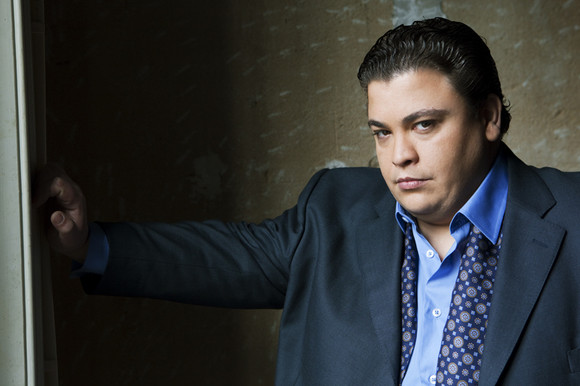
Later that evening, after many months of trying, the opportunity had finally arisen to interview Mário Raínho, an iconoclastic poet of the fado. Raínho has written lyrics for many singers, ranging from Fernando Maurício to Ana Moura, and is outspoken about the critical importance of poets and lyricists to the continued vitality of the fado. This importance is partly a consequence of the nature of the art form. The "fado tradicional" (traditional fado, or, perhaps more appropriately, the fado estrófico--or strophic fado--as the guitarist José Pracana has referred to it) consists of a smallish number of musics. The "fado tradicional" approach to the fado therefore requires new lyrics set to works within this corpus of music if the form is to survive, or at least not become stale. Another force at work here is the simple fact that there are lots of people who go out and sing multiple times every week--and many more who go out to here these same people every week. And when I say "every week", I mean it. Now, do you really want to hear the same three lyrics from the same singer every week? Hence, the poet.

Mário Raínho
Raínho has recently become involved with organizing fado at a small restaurant called "Pérola do Fado", (Pearl of the fado) and this is where we met to discuss his work. The interview produced a lot of material, though we only spoke for 30 minutes. One interesting tidbit: Mário began as a singer, who eventually wanted different lyrics to sing, and thus began his career as a poet. Pick up any current fado record, and the chances are good that at least one of his lyrics is included.

Miguel Ramos
The Pérola's location is "out"--not in Alfama, not in the Bairro Alto, not anywhere near the tourist track--but actually not at all far out of town. Maybe this is how it's going to be for a while: the fado is going to hide in the hills until the craziness over the UNESCO designation dies down. Judging by the results of this evening, if you're willing to venture just slightly beyond the standard confines, there are some beautiful moments to be had.

Pérola is divided into two spaces: café in the front, restaurant in the back. The fado happens in the back. Dinner was great and not at all expensive. The musicians for the evening were Paulo Jorge (gp); André Ramos (vb)--more evidence of the small world of the fado as he is the brother of the singer Miguel Ramos; João Moreira (vb); and, later, António Oliveira (vb).


As I learned, the singers and musicians were all essentially professional: many of them had "other jobs" but were here for the night to sing for each other, and for others with a very strong appreciation of the fado. The repertory and style of playing were nothing like what you would hear in the first hour or two at the typical fado joint: they got right to the heart of the matter.

Miguel Ramos was the first singer. He delivered a powerhouse performance--quite different from the subdued one I expected. Unfortunately, I do not have any recording whatsoever of his performance: I was too flabbergasted to do anything. Buy the record! Next was Ana Sofia Varela. Her voice was really not with it this evening: seemed like she had something perpetually stuck in her throat. Next was Jorge Aguiar, followed by Jorge Nunes (mp3) (the son of Jorge Fernando)--instantly recognizable by his voice.

Now an intervalo. As I ventured outside, Artur Batalha was just arriving. "It's the first time I've been here", he said. At some point I asked Mário if he could somehow squeeze Batalha into the lineup before we had to leave. He said he'd try. In truth, it was not a very fair request, as the house was full of fadistas who had been waiting for their turn to sing. But I was beginning to feel desperate. The next singers Nelson Lemos and  Sónia Santos (mp3). Here is a fairly recent video of her from RTP. Judge for yourself: I liked her quite a bit. Then that was it: we had to leave.

To give a flavor of his work, here is a translation of a short lyric of Mário's, most associated with Fernando Maurício, entitled "A minha oração" ("My prayer"). Many thanks to Mário himself for providing the lyrics and the translation.


15-May-12


19 May 2012

Day 3 in Lisbon

Jaime Nunes
Settling in to the groove... Visited the Tasca do Jaime for the first hour of the afternoon. The musicians were Paulo Silva (gp) and Carlos Fonseca (v), who were later joined by the owners' son, Duarte Nunes (v). They opened with a guitarrada. Jaime sang, followed by César Caixinho, João Soerio and Bruno Horta. Below are two videos from João and one from Bruno, respectively. Those who are familiar with João's work will notice a more refined style to his singing here, particularly in his attention to the lower end of his range, as well as a more relaxed and confident approach to the lyrics. The change is conscious. I am looking forward to a couple of musical surprises from João this year. He is sounding great.

Scroll down for the rest of the story from today...


Miguel Ramos at
Mesa de Frades
Later that evening I met with the singer and musician Miguel Ramos, to discuss his life and work in the fado, focusing in particular on his new CD, which he is in the midst of recording. This was a follow up from my earlier conversation with his brother, André--himself a musician. The interview is going to take a bit of time to write up, but I want to note a couple of things here. Miguel's record sounds very promising, with nearly all original lyrics (by various lyricists), and mostly all classic fado with a few musical fados. The personnel are top notch and varied. Our conversation covered his early years, including his time spent under the tutelage of Fernando Maurício, and his training and ongoing work as a musician and singer. I had an opportunity to hear him the following evening at the Pérola de Fado--but more about that in the next writeup!


13 May 2012

Day 2 in Lisbon

Now I understand why, during our year in Lisbon, I did not keep a continuous blog: there is simply too much happening to cover, and there is certainly not enough time to do everything we'd like to do.

Last night we met a friend in the Alfama to hear some fado--destination unknown. We simply could not decide where to go: we wanted a decent dinner, plus fado, but did not want to pay 30+ euros per person for the privilege. He suggested dinner at a local restaurant, one that our friend, Tô Lisboa, knows well. We entered and to our surprise, there in the corner, was the great guitarist José Pracana. José Pracana has been in the fado for a long time (see this evidence and a short biography in Portuguese). The last time I met him was also by accident: on a plane from Boston to the Açores. Also in the restaurant was the viola player José Nunes.
José Pracana (l) and José Nunes (r)
After a short conversation with Sr. Pracana, he and Sr. Nunes played a Coimbra fado (sung by Sr. Nunes, see the video below), then a young woman sang "Os meus olhos são dois círios", then a short guitarrada. Sr. Pracana told me that he is going to be taking part in the second fado festival of Madrid. The program looks excellent: they are showing two films by Diogo Varela Silva (Fado Celeste and O Rei Sem Coroa). I covered some of his work in a recent article in the Luso-Americano. Sr. Pracana is going to be giving a lecture/demonstration on the fado, addressing music, lyrics and instrumentation. Lots of other great stuff is going to be happening. I hope to meet with Sr. Pracana during the coming week, so perhaps there will be more information.


Next stop was Sr. Fado, where the musicians were Eduardo Rodrigues (guitarra portuguesa) and Duarte Santos on the viola. Duarte began the evening with an explanation of the fado (in English) for the audience, most of whom were not Portuguese. He discussed first the instrumentation of the classic set-up, then the "traditional" versus "musical" fado. Unfortunately, I was not able to record this mini-lecture. If I can get Duarte to recount it for me, watch for the post here. The singers we heard were our friend, Tô Lisboa, then Oudete Miranda, Nuno de Aguiar, and Ana Marina.


[video to come in the next day or so]

Now what? Tô and Nuno de Aguiar left for the Tasca do Chico in the Alfama after they sang. By the time we walked by there, it was too full to bother trying to enter. The Grupo Sportivo Adicense, up from the Esquina d'Alfama, was having a fado night, so we stopped there (the last time I was there it was to hear Rodrigo, courtesy of the super-duper fado fan. João Braga (gp) and Chico Borges (v) were the musicians. We heard Inês Ribeiro, Rui Costa and Alice Nunes. As we were arriving, there was some arguing over the order of singing, and a couple of fadistas left in a huff. Floating in the background the entire time was Zé António.

During the break, Artur Batalha walked in. It's hard to describe what happens to a room like this when a very established fadista enters. The place got a little bit quiet. As everybody around here knows, with the closing of Os Ferreiras, Batalha no longer has a regular gig. That's a lot of talent floating around, waiting to land. The super-duper fado fan (doesn't sing, doesn't play, knows all fados and fadistas, is always there at the right place and the right time) leans over to me and says, "Batalha. My favorite." Somebody managed to corral Batalha and Zé António into a photo. I saw my chance and jumped. These two singers have a common history but diverging paths.


Artur Batalha (l) and Zé António (r)
Date Unknown
May 2012

We were then put in a tough predicament. But as we left we heard somebody say something like "Batalha was going to sing for a couple of friends, but they just left, so no." Thinking that Batalha would be singing, we came back. However, the next singer was not Batalha but Vítor Rodrigues (who I really like). We stayed for his three fados then left. So, we'll never know whether Batalha sang, or what, or the heights he reached this time.

New flash! The videographer 4FadoLisbon has posted two videos of Batalha from last night, along with those of a number of others. The videos are here and here. The other videos are also good (e.g., here is Quim Cigano). <

Taxi home, and that was the end of the night.

12 May 2012

Day 1 in Lisbon

Pedro Galveias
First stop, Esquina de Alfama, where there have been a few changes. As we walked up from the Largo do Chaffariz do dentro, I thought..."I recognize that voice." It was Pedro Galveias. He was there substituting for Ricardo Mesquita. We managed also to hear Ivone Dias, Daniela Giblott (worth seeking out) and Lino Ramos--in duet with Pedro on "Lucinda Camareira". The musicians were Tiago Morna (gp) and Júlio Garcia (v). Pedro told me that he has begun working on a new record (lots of surprises in store there). We talked a little bit about the closure of Os Ferreiras, which really is a major blow to the fado tradition. This of course means that Artur Batalha is now without a steady venue, which raises the question--Where is he?

We had dinner and then wandered around the Alfama. Carlos Macedo and Jerónimo Mendes were taking a break from their work at the Taverna d'El Rey (here is an interesting photo with the two of them and Nathalie Pires, a recent contributor to this blog). These are two top flight musicians, particularly when they are playing together.

At Sr. Vinho, the house was completely full with one group of Spaniards having a pre-wedding celebration for one of their friends (a woman wearing an electric purple wig). At 22:00, they hadn't even started playing--too busy taking care of dinner arrangement. The Spaniards were really raucous. We'll stop by there tonight (Saturday).

Things were quiet at Mesa de Frades (normal for that hour). I foolishly mistook Miguel Ramos' brother for Miguel Ramos, but he was quite diplomatic about it. Both are musicians and look very similar to each other.

Chico
I said the first stop of the night was the Esquina, but it was really O Faia in Bairro Alto. This place (and the Tasca do Chico) are to me the only two reasons to visit the Bairro Alto for fado. O Faia at the moment has an incredible group of singers: Anita Guerreiro, Lenita Gentil, Ricardo Ribeiro (and, I think, António Rocha). We also passed by the Tasca do Chico in the Bairro Alto, where I learned from the owner that, starting next month, they will be having "Youth fado"--with younger kids who sing or play the fado. Should be great. It was indeed Chico who we saw later in the night at the Tasca do Chico in the Alfama, delivering some of the supplies for the night.


The Current Lineup of the Esquina d'Alfama


09 May 2012

António Zambujo in the USA--Right Now!

António Zambujo is in the US for three dates:

Tonight (May 9) in Cambridge, MA at the Regattabar;
Tomorrow (May 10) Naragansett, RI at the Atlantic House; and
Saturday (May 12) in New York City at the World Music Institute.

Go if you can!

Earlier today I interviewed him briefly for an article in the Portuguese-American Journal. Should be coming out today or so.

07 May 2012

Vamos aos fados!

--"Can you guys go home, quietly?"
--"Yes sir we can. But right now we are not going home..."

from Humores ao Fado e à Guitarra (bilingual edition)

I will be in Lisbon for a couple of weeks this month. Watch this space for updates on the fado. I have a couple of projects in mind that I want to accomplish while there.

If you happen to be reading this and have any recommendations on fado houses to visit, let me know in the comments. There are a number of places I plan to visit--stalwarts like Sr. Fado in Alfama, and maybe even O Faia. There are also some that I'd like to visit (Sr. Fado in Alcochete; Pérolas do Fado, which is Mário Rainho's new venture). Others that I'd really like to visit but that are too far away (Ricardo Ribeiro in Figueira da Foz). Some, unfortunately, are gone--like Os Ferreiras (or this). The fado is poorer without them.


19 April 2012

Biography of Ricardo Ribeiro

{Note: with Ricardo Ribeiro's permission, I'm posting this English-language version of his biography. If you have a chance, check out his latest CD, "Porta do Coração", which I've written about elsewhere on this site, as well as the CD "Em Português" discussed below. Other articles about Ricardo from this site are here. An English-language translation of an interview with him is here.} 

Ricardo Ribeiro was born in Lisbon. He debuted in public at the age of 12, in The “Ajuda” Academy in the neighborhood where he grew up. In this first show he was accompanied by the guitarist Carlos Gonçalves and the violist/classical guitarist, José Inácio who became one of the major references in his career. His main influences are: FERNANDO MAURICIO, MANUEL FERNANDES and ALFREDO MARCENEIRO, all of which are old-style traditional fado singers.

"When I first heard Fernando Maurício, his singing was so intense that it made me feel a part of the story he was telling."


At the age of 15, he joined the cast of the restaurant "Os Ferreiras" in Lisbon - sharing the Fado evenings beside his master FERNANDO MAURICIO and ADELINO DOS SANTOS (guitarist). Through this experience and by studying everything that involves Fado, Ricardo Ribeiro gained a great knowledge of the traditional style of Fado, specifically, the old-style traditional Fado. Later he was part of the cast of the typical restaurant "Nónó" in Bairro Alto, which opened the doors for him to the most important Fado Houses in Lisbon.

  • In 2001 at the invitation of the French Ministry of Culture, he attended the festival in ALU, at the House of Maria Casares (Southern France).
  • He participated in the tribute disc to Amalia Rodrigues by the editor World Connection.
  • In 2004 he released his first album - "RICARDO RIBEIRO" edited by CNM (Anthology Collection).
  • In 2005 at the invitation of director Ricardo Pais, he was a part of the show "CABELO BRANCO É SAUDADE" at the National Theatre of S. João beside CELESTE RODRIGUES, ARGENTINA SANTOS and ALCINDO DE CARVALHO, which was shown in some of the most important theaters and concert halls in Europe: Cité de la Music (Paris), Teatro de la Abadia(Madrid) Frankfurt Opera, Theatre Mercandante (Naples) or Casa da Música (Oporto).
  • He was part of the cast of the famous film "Fados" by director Carlos Saura.
  • He has collaborated in projects with some of the biggest names in Portuguese music: JOÃO GIL, RÃO KYAO and PEDRO JÓIA.
  • With the lute player RABIH ABOU KHALIL he arouses the attention of international critics.
The album “EM PORTUGUES” of the Lebanese musician has a repertoire fully interpreted in Portuguese. The interpretation of Ricardo Ribeiro received many acclaims and the very best compliments. This album was released in 2008 by ENJA RECORDS. All compositions by RABIH ABOU KHALIL are from poems by SILVA TAVARES, MARIO RAINHO,  TIAGO TORRES DA SILVA amongst others. "EM PORTUGUES" was voted one of the 10 best albums "Top of the World" in the British magazine "Songlines," which refers to Ricardo Ribeiro as "... the rising star of Lisbon Fado".

 In the words of RABIH ABOU KHALIL , Ricardo Ribeiro as a singer cannot be expressed better: “Working with Ricardo is an exhilarating experience. A musician; so instinctive and natural, so deeply rooted in his culture that at all times he manages to transcend it. A singer so unusual; he never attempts to stand alone, but connects with the musicians, never missing a beat, inspiring them and letting them equally inspire him. Ricardo Ribeiro is not a singer. Or, to be more precise, not only a singer. There is a very important element of expression in Arabic music called “Tarab”. A term not easily translatable, it describes the feeling of being emotionally moved by music. Perhaps the closest to it would be the Portuguese expression of “Saudade”. A singer who can make his listeners feel “Tarab” is a “Mutrib”. Ricardo is not a singer, he is a mutrib. Ricardo Ribeiro is not just a cantor, he is a saudador...”

He participated with two themes in the film "RIO TURVO" directed by EDGAR PERA alongside Teresa Salgueiro and Nuno Melo. In 2010 he participated in "FILME DO DESASSOSEGO", a film directed by JOÃO BOTELHO and based entirely on the heteronym “Bernardo Soares” created by the Famous Portuguese writer Fernando Pessoa. In this film Ribeiro sang two songs, one of which was played and composed by him.

However, it is with Fado that he truly identifies himself: “Fado is all that happens. When we laugh or cry when we remember or forget. When we love or hate.”
AWARDS

  • 1996- 2nd place in The Grande Noite do Fado, Lisbon. 1997 and 1998 – 1st Place in The Grande Noite do Fado, Lisbon. 2005 - Male Award Revelation by “The Amalia Rodrigues Foundation”. 2006 - Award of Revelation by “Casa da Imprensa”. 2011 - Award for best interpreter awarded by “The Amália Rodrigues Foundation”.
  • "DOOR OF THE HEART", the latest album by Ricardo Ribeiro released on April 19th, 2010 went directly to the 5th place in top national sales. It was produced by Ricardo Ribeiro, with the collaboration of Pedro de Castro (Portuguese guitar) and Jaime Santos (Viola/Classical Guitar).

Currently Ricardo Ribeiro sings in the Famous Fado House, “O Faia” (www.ofaia.com) and the Typical and Charismatic Fado House “Mesa de Frades” (www.facebook.com/pages/Mesa-de-Frades) set in a 17th Century Chapel in Alfama, a traditional historic quarter of Lisbon.

Ricardo Ribeiro is more than just a Fado singer. Currently he is working on a project with the ingenious guitarist, Pedro Jóia, accompanied by, the greatly talented Rui Borges Maia(flute), Yuri Daniel (bass) and Vicky Marques (drums). This project transcends Fado as it takes us on a journey with the dynamic quintet that spans the musical worlds of the Mediterranean and the wealth that they carry.  The combination of Fado, Flamenco and the music of the Maghreb are treated with all the passion that emanates from their common matrix.


08 April 2012

Fado in Newark: Clube dos Açores

Full House
The fadista and musician Carlos Macedo visited Newark, NJ yesterday (7 April) as part of a Grande Noite de Fado, which also involved about twenty other singers and musicians, including eight medical students from the University of Porto. The impresario (and an editor of the Luso-Americano) Luís Pires organized the event, and served as the emcee, keeping a steady hand on a night that--in less capable hands--could have dragged on until two or three in the morning. There were many highlights, plenty of revelations, a couple of awkward moments, and a lot of good fado. In other words, this was the kind of evening that is normally very difficult to find here in the United States. But as Carlos Macedo said from the stage, "This is Portugal."

J. Silva, P. Pimentel, V. Ferreira, C. Macedo
Given the variety of singers, styles, music and lyrics performed last night, the musicians deserve special recognition. These were José Silva (guitarra portuguesa), Viriato Ferreira (viola), and Pedro Pimentel (contra bass). My understanding is that they are based in the Rhode Island area, and travel throughout the northeast playing with various singers. They were rock solid.

Part One
The evening began with fado singers who, as Luís Pires said, happen to be located in the USA. But, said Pires, "They are not Luso-American fadistas--they are fadistas." As Luís was introducing the night, he quoted from the lyrics to Lisboa Antiga, which caused somebody way in the back to break out spontaneously into that fado. The entirety of the room quickly joined in, and we are on our way (as the Portuguese say, "Vamos embora!").

Luís Pires
Here's my list of singers and what they sang.
  • Zeca Santos: "O Embuçado", sung dramatically in an equally dramatic gold jacket.
  • Mena Leandro, singing a fado menor of Porto.
  • Kimberly Gomes: "Amor de mel, amor de fel". Kimberly is a 20 year-old from Newark with a great voice and plenty of confidence--despite this having been her first time singing at the Clube dos Açores. Watch for her on the local scene, particularly as her talent matures.
  • Elizabeth Maria: "Maria Madalena" (the first of a few songs that reminded everyone of Holy Week).
  • Nathalie Pires: "Meu amor marinheiro". Nathalie is an established singer in the fado scene (in the US and abroad). Based on my conversation with Kimberly Gomes and others, Nathalie is now giving back to a younger generation what she has learned from throughout her experience as a fadista. Great to see.
  • Erminia Silva: Rosa enjeitada.
  • Carlos Furtadi: a young man with Açorean roots.
  • Manuel Renato: "Velho Marinheiro", with lyrics by the great contemporary poet Mário Rainho--and the entire crowd singing along with chorus, "Mas que é marinheiro!"
  • Salomé Carinal: "Os Búzios", a recently minted staple of the fado.
  • Jorge Quaresma: "Gaivota", sung with plenty of "coração, sentimento e alma" (heart, sentiment and soul) by a veteran of the Newark fado scene.
  • Pedro Botas: "Guitarra triste", by a young singer who has just released his first record. 
  • David Couto sang "Naufrágio" in homage to Amália Rodrigues.
  • Tony Quim, who sang a fado carriche in the grand style. This is a singer I would willingly travel to hear again.
Part Two
The Tuna Académica of Porto, comprised of eight young people, all medical students, took the stage to sing the fado of Coimbra. The group, whose formal name is "Grupo de Fados de Medicina do Porto", has been active for more than twenty years, and travels to Portuguese communities worldwide.


The current group consists of three players of the Portuguese guitar (tuned for the Coimbra fado), two players of the viola do fado, and three singers. In a brief interview before the show, they explained that the classic repertory of the Coimbra fado resonates most strongly with the Portuguese communities abroad. They were a very capable group. Indeed, one of the audience members told me he felt that one of the singers could certainly abandon his career as a doctor and find success as a fado singer. Later in the evening, as the entire audience sung along with the chorus of the "Balada de Despedida", I saw clearly what he meant. The group's repertoire also includes three or four original compositions. Look for them on Facebook under their official name.


Part Three
Carlos Macedo, the headliner of the night, traveled from Portugal to sing and to play the Portuguese guitar. While his style is subtle, it commands attention and respect, and is certainly his own. In his long career, he has achieved a great deal of recognition as a singer, musician and songwriter. After more than 25 years as the house guitarist at Senhor Vinho in Lisbon, he now performs at Taverna d'El Rey in the Alfama--an intimate and storied venue.

Tonight he entered singing from the back of the room, surprising everyone. His first song, "Quero ir à minha terra" (with lyrics by José Luís Gordo and music by Carlos Macedo), was sung in a very relaxed style, and followed by a mix of his own and others' works. Among the more notable performances were "Avé Maria fadista". Along the way, he quite unexpectedly made reference to the "fado humorístico", or humoristic fado. As he said, "it's a playful thing--but it's true." Now, the word for mother-in-law in Portuguese is "sogra". He took the theme of the song, "Zanguei-me com meu amor" ("I became angry with my lover"), and turned it into "Zanguei-me com a minha sogra"--an uproarious lyric of his own authorship that was all the more special for never having appeared on one of his recordings. After this, and perhaps in order to bring order back to the house, his next song mined the religious vein of the fado. It was "Igreja de Santo Estevão", a fado made classic by Fernando Maurício but here sung in Macedo's own style.

During the show he also discussed his love for his wife, and recounted that, when she was diagnosed with cancer, he said that he would undertake a pilgrimage to Fátima in the hope that she would be cured. Indeed she was cured, and he went on to write a book about the experience. He then sang his own composition "Ser peregrino" ("To be a pilgrim"), with lyrics that describe how the pilgrim becomes closer to God by undertaking the pilgrimage. It was a deeply moving moment, and a fitting way to encapsulate a show held on Holy Saturday.

Carlos Macedo em Newark

28 March 2012

Nathalie Pires


I spoke recently with the Luso-American fadista Nathalie Pires. I invited her to discuss her life within the fado for this blog and she responded with this great essay. I hope you enjoy it!  -DM


by Nathalie Pires

When interviewed, I have yet to meet a reporter who doesn’t ask me, “What is Fado”? I always give what I feel is a generic answer: Fado translates to fate or destiny, and it is also a genre of music that many explain as an “urban folk music” that is unique to Portugal. But what Fado is to me personally is an energy inside of me that longs to be released. There is a different Fado for every emotion I have ever felt, and countless Fados I could almost swear were written specifically about my life experiences. There is no other genre of music I can identify myself with.

But I didn’t always feel this passionate about the “Portuguese blues”. In fact, I remember being a child and my parents dragging me to Fado nights at the local Portuguese clubs. We’d be there for hours listening to what seemed like old women dressed in all black, crying and complaining in song all night in candle light with a constant steady cloud of cigarette smoke hanging over the whole room. My intuitive recognition of this ambience wasn’t a positive one, and I thought of Fado as “old people music”. That is, until years later: April of 1999, when I was invited to sing at a Fado night in my hometown of Perth Amboy in New Jersey.

In preparation for my performance, my father gave me a 2-disc album of Amália Rodrigues’ greatest hits and my mother bought me my first black shawl. I learned 3 fados with lyrics that we felt weren’t too heavy for a 13 year old girl. I sang for the first time accompanied by a classical and Portuguese guitar in a dark room, in front of a quiet and very intense crowd. The whole time I felt extremely intimidated by the attentive audience, hypnotized by the sound of the guitars, overwhelmed by the emotion these Fados demanded of me, yet in complete control of my performance. That night I discovered the power of Fado: the audience’s support and reaction was my driving force to pursuit being a “Fadista.”
Nathalie at 14
Paulo Jorge (L) and Carlos Fonseca (R)

That September, I mourned the death of Amália Rodrigues along with all of Portugal. My greatest idol had passed away and Fado entered a dark period. Many in Portugal were convinced that Fado was going to die out along with the passing of the Portuguese icon. I, however, was born and raised in the United States where every Portuguese immigrant or luso-descendant I knew were super proud of their roots and extremely dedicated to keeping our traditions alive--including Fado. So, I continued to learn more Fados and was little by little becoming more popular within the Portuguese community. Word was spreading that there was a young girl singing Fado and crowds would curiously gather to listen because it was so unusual for someone so young to sing such deep topics. But I did, and although I couldn’t relate to every lyric I sang, I was extremely dedicated to my new pastime.

As I got older, I sang Fado with growing confidence. I grew closer to my guitarists, who helped me select my repertoire and choose the right keys for my maturing voice. I became more familiar with my audience, and with the Fados that we connected to the most. Before I knew it, my schedule was getting busier and busier with frequent performances along the east coast and even Canada. This was one of the most rewarding times of my career because I got these opportunities simply by “word of mouth”.

In 2007, I recorded my first album Corre-me o Fado Nas Veias ("Fado runs in my veins"), thinking it would be a nice keepsake. To my surprise, the album was released with huge success and even had a hit original single in California called “Festa Brava a Portuguesa” which was written by my father, Telmo Pires. It was awarded “Album of the year” by United Artists of America. Before I knew it, I was busy touring Portuguese clubs, restaurants and associations around the country. Some of my other performances included one at the United Nations, where I represented Portugal for ambassadors from all around the world. I also sang for the Vice President of the Portuguese Republic at the Boston State House, at Portugal Day in Central Park in New York City, at SOUNDshift International Music Festival in New Foundland (Canada), and at Brooklyn Academy of Music’s Next Wave Festival’s “Tudo Isto é Fado”.

Brooklyn Academy of Music (2011)
I have also performed in some of the most prestigious Fado houses in Lisbon:  Sr. Vinho, Bacalhau de Molho, O Faia, Mesa de Frades, Taverna d’el Rei, and Clube de Fado. I was honored to be invited to sing at the VI Gala Amália award ceremony. I also took part in the celebration of UNESCO's  announcement at the “Museu do Fado”, with António Parreira (guitarra portuguesa), Guilherme Carvalhais (viola) and Armando Figueiredo (baixo). Fundação Amália also recognized my accomplishments as a Portuguese-American fadista with a medal, and claimed me as an ambassador of the fado in the United States.

Clube do Fado, Lisbon
Mário Pacheco (L) and Ricardo Cruz (R) [Miguel Ramos (viola) not pictured]

But my most rewarding performances are by far my weekly gigs in New York City. I enjoy singing without amplification in the intimate environment of 30-50 people of diverse ethnicities. I love it when the audience interacts and asks me about the poems and emotions that I’m interpreting and questions the roots of the Portuguese guitar. Sometimes it’s even overwhelming for the audience as I recall one time an Italian man who was in the City on vacation cried uncontrollably even though he claimed he didn’t understand the language but he explained that he imagined what he felt I was singing through my expressions. For an artist, nothing can top that.

Singing in Manhattan has also given me opportunities outside of Fado. I met Tim Ries, one of the best saxophone players in the world, who has also toured and recorded with the Rolling Stones. After listening to my album, he invited me to perform at Highline Ballroom in New York City, and then in Austria. I sang two songs that he had recorded with Ana Moura for his album “Tim Ries and The Rolling Stones Project”, where he adapted the Rolling Stones hits “No Expectations” and “Brown Sugar” with Fado influences. That experience was surreal.

At Red Bulls Stadium
I also had the opportunity to sing the Star Spangled Banner at the New York Red Bulls Major League Soccer season opener in their stadium with over 20,000 enthusiastic fans. That was the most exciting/nerve-wrecking performance of my life! Singing in Manhattan also gave me the opportunity to meet Pedro Henriques da Silva, co-founder of the “Manhattan Camerata” where I am occasionally featured during many of their concerts and even their debut album. I am also actively involved in their Tango-Fado Project, which also features Grammy nominee Daniel Binelli, one of the world’s best bandoneon players. Being accompanied by an orchestra has definitely been one of the highlights of my career.

Anita Guerreiro
I’m also proud to share that living Fado legend, Anita Guerreiro is my godmother (madrinha) of Fado. She gave me this honor in front of an audience in 2008. She has just celebrated 55 years in her career yet gives me the upmost support and respect.

But some of my most fulfilling experiences in Fado weren’t during my performances at all. One time I was listening to Fado while driving on the NJ Turnpike and as I was reaching out to pay the toll, the man in the tollbooth stuck his head in my car when he realized what I was listening to and exclaimed that he was a huge Fado fan without even knowing who I was! Meanwhile, the drivers behind me started to honk their horns and interrupted our unusual encounter. Another time, I was set to perform in a festival in New Bedford, NJ and without ever meeting me before then, an American man gave me a Fernanda Maria LP that he had found at a thrift shop simply because he wanted to give it to someone “who would appreciate it”. I appreciated it even more because of his kind gesture. Even at my own wedding, as my husband and I celebrated with our guests, almost everyone requested that sing. So I did. Overall, the continued support I get makes it all worthwhile. It is both inspiring and motivating. It’s extremely draining juggling my professional career as a fulltime accountant while being so dedicated to Fado. I justify it by accepting that accounting is my reality and Fado is my therapy.


Through all of my experiences, Fado transformed from being a pastime to a responsibility, but always my passion. Besides from the satisfaction it gives me as a performer, the poems that I sing have taught me so much about Portugal and I’m proud to share our music with an audience that I can connect to. I’m often asked why I think Fado is so successful in the United States. My answer is because I’m singing about life, Portugal and of course “saudade”. What Portuguese immigrant or descendant doesn’t relate to that? And for those that listen to Fado and don’t speak Portuguese, I believe enjoy it for the emotional thrill they get from the musicians. For that simple reason, I am proud to be a “luso-american fadista”. I never dreamed of accomplishing all that I have with Fado. I truly believe Fado is my destiny and the more life throws at me, the more natural it is to me. It is my mission to continue to spread Fado to whoever is willing to listen!

with Carlos Macedo
Future performances that I’m looking forward to include:

  • 4/7: Clube Acores, Newark, NJ w/ Carlos Macedo 
  • 4/19: North Virginia Community College (Performance & Workshop)
  • 5/14: Kennedy Center, Washington, D.C.
  • I also perform every Wednesday night at Alfama Restaurant in NYC. www.alfamanyc.com
  • For more performance dates and info visit www.nathaliepires.com.