For about the past year, two news outlets--the Luso-Americano and the Portuguese-American Journal--have been publishing some of my writing about the fado (and, occasionally, other Portuguese-related themes). Both have mentioned this fado blog, as well as the one I write in Portuguese. So, it's only fair that I say a bit about each of them!
The Luso-Americano is a Portuguese language print newspaper, founded in 1928 and published in Newark, New Jersey. With the widest print distribution of any Portuguese-language newspaper in the USA, it covers Portuguese and Portugese-American news items. Lately, the journalist Ricky Durães has been writing some great stuff about the fado, particularly in the NY metro area, covering many of the area's larger and smaller fado performances and related events. Indeed, the Luso-Americano is probably the first best place to look for news and upcoming events on the fado (and other Portuguese music) along the east coast. For example, did you know that Ana Moura is coming to Durham, North Carolina on 29 March 2013, or that Deolinda will be in Chicago on 24 September?
I should also note that, in addition to news, the Luso-Americano publishes various essays and opinion pieces. These include an excellent, very long-running series written by Ferreira Moreno, centered on Portuguese culture and folklore. The paper also has an English language section. You can subscribe to receive it by post, or read a slightly delayed copy online. I am currently working on a Portuguese-language essay for them on the topic of contemporary poets and the fado.
The Portuguese-American Journal is a fairly recent endeavor, published in English. The journal is "dedicated to the Portuguese-American heritage with the purpose of informing and offering an insight into the Portuguese-American experience."Its editorial scope is broad, with new articles published frequently. It's available through Google News feed, as well as through its own web site. The most recent article I wrote for them is a review of Sandra Correia's new album, "Ao Vivo".
A blog about things happening now in the fado of Lisbon.
Nota: faça um clique no botão de Google Translate (à direita) para aceder uma versão deste site em português.
21 August 2012
11 August 2012
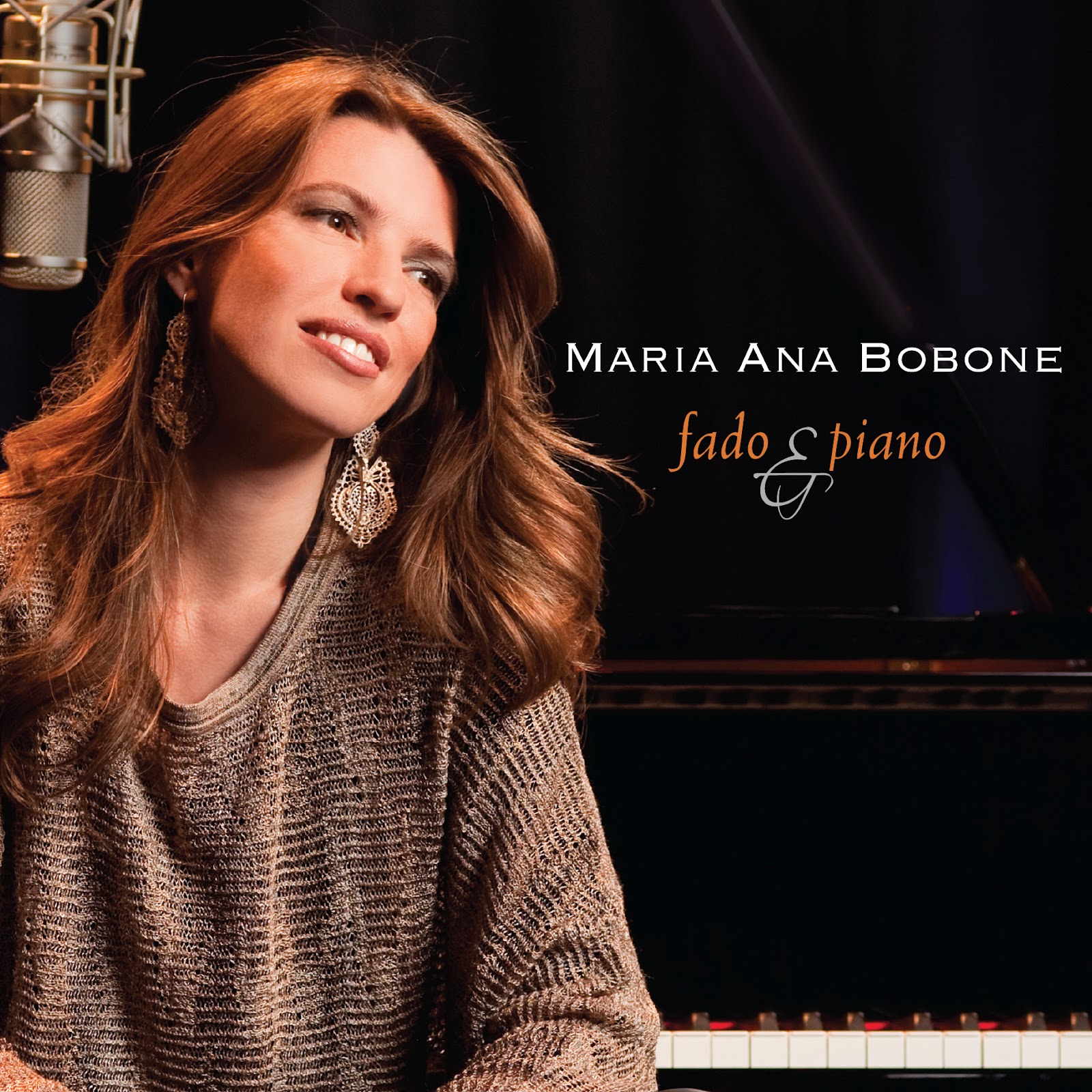
More on "Fado&Piano"
Here's a very informative comment on the latest Maria Ana Bobone record, written by one of the readers of this blog, Aldemar Fernandes Parola. (Note: version in Portuguese is below.) I hope you enjoy it!
'In my opinion fado for voice and piano is not a new hypotesis. What is new in “Fado & Piano” is the fact that Maria Ana Bobone plays piano and sings simultaneously. Few singers have the knowledge, the ability and the art to play piano and sing simultaneously. Since fado and the majority of the portuguese traditional songs are a kind of ritual music, transmiting feelings and emotions, the control of the cadence is extremely important and to have control on the cadence nothing better than to have one person playing and singing.
'Piano was already used in her second CD, “Senhora da Lapa” as an accompaniment for the majority of the tracks but it was played by João Paulo, another virtuoso, composer of the beautiful melody of “Senhora da Lapa” score.
'In the first CD of Maria Ana Bobone, named “Luz Destino”, published in 1996, which was more audacious than “Fado & Piano” due to the arrangements with a barroque sonority made by Ricardo Rocha, she was accompanied at the harpsichord by João Paulo, at the portuguese guitar by Ricardo Rocha himself and in some scores at the contrabass by Mário Franco.
'May be “Fado & Piano” will be more popular than the previous CDs because at first sight it looks less sophisticated. But in my opinion this is not true. In spite of sophistication and simplicity being considered as opposed, all Maria Ana's CDs, including “Fado & Piano, are simultaneously simple and sophisticated. Is there something simpler than fado and piano? On the contrary is there something more sohisticated than voice conveing both excitement and joy in a quiet way accompanied on the piano with a harmonious arrangement ? Schubert's “lieder” are certainly good examples of the combination of simplicity and sophistication and I believe “Fado & Piano” is also another good example.'
--Aldemar Fernandes Parola
Versão em português: Na minha opinião fado para voz e piano não é uma hipótese nova. O que há de novo no "Fado & Piano" é o fato de Maria Ana Bobone tocar piano e cantar ao mesmo tempo. Poucos cantores têm o conhecimento, a habilidade e a a
rte de tocar piano e cantar simultaneamente. Como o fado e a maioria das canções tradicionais portuguesas são um tipo de música ritual, transmitindo sentimentos e emoções, o controle da cadência é extremamente importante e para ter o controle sobre a cadência nada melhor do que ter uma pessoa tocando e cantando.
Piano já foi usado como acompanhamento em seu segundo CD, "Senhora da Lapa" tendo sido interpretado por João Paulo, outro virtuoso, compositor da bela melodia da canção "Senhora da Lapa".
No primeiro CD de Maria Ana Bobone, chamado "Luz Destino", publicado em 1996, que foi mais audacioso do que o "Fado e Piano", devido aos arranjos com sonoridade barroca feitos por Ricardo Rocha, ela foi acompanhado ao cravo por João Paulo, à guitarra portuguesa pelo próprio Ricardo Rocha e em algumas das canções por Mário Franco ao contrabaixo.
O CD Fado & Piano de Maria Ana Bobone certamente será mais popular dos que os anteriores por uma única razão: aparenta ser menos sofisticado. Mas, na minha opinião isso não é verdade. Embora sofisticação e simplicidade sejam considerados como opostos, todos os CDs de Maria Ana, incluindo "Fado & Piano, são ao mesmo tempo simples e sofisticados. Existe algo mais simples do que voz acompanhada ao piano? Haverá algo mais sofisticado do que a voz transmitindo tanto emoção como alegria de uma forma serena acompanhada ao piano com um arranjo harmonioso? Os "Lieder" de Schubert são certamente bons exemplos da combinação de simplicidade e sofisticação e eu acredito que "Fado e Piano" também é outro bom exemplo.
Piano já foi usado como acompanhamento em seu segundo CD, "Senhora da Lapa" tendo sido interpretado por João Paulo, outro virtuoso, compositor da bela melodia da canção "Senhora da Lapa".
No primeiro CD de Maria Ana Bobone, chamado "Luz Destino", publicado em 1996, que foi mais audacioso do que o "Fado e Piano", devido aos arranjos com sonoridade barroca feitos por Ricardo Rocha, ela foi acompanhado ao cravo por João Paulo, à guitarra portuguesa pelo próprio Ricardo Rocha e em algumas das canções por Mário Franco ao contrabaixo.
O CD Fado & Piano de Maria Ana Bobone certamente será mais popular dos que os anteriores por uma única razão: aparenta ser menos sofisticado. Mas, na minha opinião isso não é verdade. Embora sofisticação e simplicidade sejam considerados como opostos, todos os CDs de Maria Ana, incluindo "Fado & Piano, são ao mesmo tempo simples e sofisticados. Existe algo mais simples do que voz acompanhada ao piano? Haverá algo mais sofisticado do que a voz transmitindo tanto emoção como alegria de uma forma serena acompanhada ao piano com um arranjo harmonioso? Os "Lieder" de Schubert são certamente bons exemplos da combinação de simplicidade e sofisticação e eu acredito que "Fado e Piano" também é outro bom exemplo.
31 July 2012
Fado and piano??? OK, maybe this one time!
Maria Ana Bobone has a new record out--fado and piano. I've heard this sort of thing before--or thought I had. I went once to hear a live performance with two guitarists, one pianist and one singer--all top-notch. Total disaster. Tonally, it was a three-way fight, but perhaps they hadn't done enough practicing to enable them to compose dialogue in real time. In any case, I've never heard the combination yield good results.
Until now, of course. Maria Ana Bobone has arrived with a new hypothesis: fado for voice and piano, accompanied on some tracks by a contrabass and/or (ahem) a guitar. The voice+piano combination is not so revolutionary, as Amália Rodrigues herself experimented with it, but that was different (this was work with Alain Oulman during recitals, and I believe the "formal" recorded output is pretty small.) There's also a theory that fado was "originally" performed with voice and piano, but that is an argument for another day!
Back to this record. Perhaps because Maria Ana Bobone is both playing and singing, I think the combination works perfectly well here. Admittedly, I've not heard the whole record, but--if the combination was going to fail--it would have failed on the tracks I heard. The piano playing is heartfelt, deeply steeped in the fado, and the voice is crystalline. Somehow I'll have to get my hands on a complete copy (looks like it's available through the US-based iTunes). For the moment, here's a video that showcases her art. If anybody has heard the whole record and wants to comment, please do!
Until now, of course. Maria Ana Bobone has arrived with a new hypothesis: fado for voice and piano, accompanied on some tracks by a contrabass and/or (ahem) a guitar. The voice+piano combination is not so revolutionary, as Amália Rodrigues herself experimented with it, but that was different (this was work with Alain Oulman during recitals, and I believe the "formal" recorded output is pretty small.) There's also a theory that fado was "originally" performed with voice and piano, but that is an argument for another day!
Back to this record. Perhaps because Maria Ana Bobone is both playing and singing, I think the combination works perfectly well here. Admittedly, I've not heard the whole record, but--if the combination was going to fail--it would have failed on the tracks I heard. The piano playing is heartfelt, deeply steeped in the fado, and the voice is crystalline. Somehow I'll have to get my hands on a complete copy (looks like it's available through the US-based iTunes). For the moment, here's a video that showcases her art. If anybody has heard the whole record and wants to comment, please do!
Que Deus Me Perdoe
14 July 2012
Day 5 in Lisbon
Walking through the Alfama this evening, we stopped to talk with Carlos Macedo during one of his breaks at the Taverna del Rey. Macedo is known as a pretty serious guy, but those who have seen him live know that he has a humorous side. For example, during his recent visit in Newark, he sang "Zanguei-me com a minha sogra" ("I got mad at my mother-in-law"), a very dry and funny riff he wrote to the tune of "Zanguei-me com meu amor", the latter popularized by Amália Rodrigues. Unfortunately, this is not something he has ever recorded. During our conversation, he mentioned one of his lyrics--"Um governo à portuguesa"(lyrics here) that he has recorded--to the tune of "Uma casa portuguesa". As Carlos explained, the humoristic side of the fado has been around for quite a long time--though it has certainly fallen out of favor (along with political fado--a point that was strongly made by José Manuel Osório in many interviews). There are a few fadistas who sing exclusively humoristic fado these days, including the great Zequinha. We did not get to hear Carlos singing this night--but watch for a later report on the night that we did.
We (including my wife and children) then visited the Esquina d'Alfama. The elenco, after making a whirlwind and very successful tour of Europe (see poster), was a bit different than it was for that tour--but the vibe was just as good. On Portuguese guitar was Gentil Ribeiro (back to the Esquina after a sojourn that included the Bairro Alto), and on the viola, Júlio Garcia. For this trip, I planned next to nothing, and the improvisatory attitude was beginning to pay off. Pedro Galveias was there. Also singing were the stalwarts, Ricardo Mesquita and Lino Ramos, along with Cátia Garcia. The Esquina is a very informal and open place. The food and the fado are good, and there is no pressure put on you to eat and get out. While there do tend to be tourists there, they tend to be respectful and appreciative of the fado. The evenings start early at the Esquina, and there are always plenty of pleasant surprises--particularly early in the evening. It can get a bit rowdy at times, but once the fado starts getting serious, Lino or somebody else will calm down the crowd. All of these factors help make the Esquina a house that we visit at least a couple of times whenever we are in Lisbon.
Speaking of children and the fado, one of the many CDs I picked up in Lisbon was Saudade no Futuro. This is a record performed entirely (music and singing) by younger Portuguese kids. There is alot of talent in this group, and it is used quite wisely. If you are interested in the fado, and want a way to introduce it to younger listeners, this is the record for you. My kids--who frankly get a bit tired of the fado at times--asked to hear this record repeatedly, and read the liner notes (full credits and everything) until they had settled on their most preferred singers and musicians. The CD is even available in mp3 format on Amazon (in the US!) if you search for the title "Fados Dos 8 Aos 17 Anos". Highly recommended (watch for a full review in the near future on the web site of the Portuguese-American Journal)
We (including my wife and children) then visited the Esquina d'Alfama. The elenco, after making a whirlwind and very successful tour of Europe (see poster), was a bit different than it was for that tour--but the vibe was just as good. On Portuguese guitar was Gentil Ribeiro (back to the Esquina after a sojourn that included the Bairro Alto), and on the viola, Júlio Garcia. For this trip, I planned next to nothing, and the improvisatory attitude was beginning to pay off. Pedro Galveias was there. Also singing were the stalwarts, Ricardo Mesquita and Lino Ramos, along with Cátia Garcia. The Esquina is a very informal and open place. The food and the fado are good, and there is no pressure put on you to eat and get out. While there do tend to be tourists there, they tend to be respectful and appreciative of the fado. The evenings start early at the Esquina, and there are always plenty of pleasant surprises--particularly early in the evening. It can get a bit rowdy at times, but once the fado starts getting serious, Lino or somebody else will calm down the crowd. All of these factors help make the Esquina a house that we visit at least a couple of times whenever we are in Lisbon.
Speaking of children and the fado, one of the many CDs I picked up in Lisbon was Saudade no Futuro. This is a record performed entirely (music and singing) by younger Portuguese kids. There is alot of talent in this group, and it is used quite wisely. If you are interested in the fado, and want a way to introduce it to younger listeners, this is the record for you. My kids--who frankly get a bit tired of the fado at times--asked to hear this record repeatedly, and read the liner notes (full credits and everything) until they had settled on their most preferred singers and musicians. The CD is even available in mp3 format on Amazon (in the US!) if you search for the title "Fados Dos 8 Aos 17 Anos". Highly recommended (watch for a full review in the near future on the web site of the Portuguese-American Journal)
23 May 2012
Day 4 in Lisbon (revised and expanded)
To the side of the CD table he has a small but very respectable selection of vinyl and cassettes. That is where the real action is. Sr. Padrinho has all the qualities of a great record seller: tasteful stock, understanding of the customer, the appropriate degree of detachment. In fact, it was he who first recommended that I listen to Artur Batalha. This time, he recommended an LP from Vasco Rafael. When I returned to the US, I put it on: this is a singer who had a very big, earnest sound. It's a top flight record in the castiço tradition. I also picked up a 45 of Fernando Farinha--brilliant as always.
Later that evening, after many months of trying, the opportunity had finally arisen to interview Mário Raínho, an iconoclastic poet of the fado. Raínho has written lyrics for many singers, ranging from Fernando Maurício to Ana Moura, and is outspoken about the critical importance of poets and lyricists to the continued vitality of the fado. This importance is partly a consequence of the nature of the art form. The "fado tradicional" (traditional fado, or, perhaps more appropriately, the fado estrófico--or strophic fado--as the guitarist José Pracana has referred to it) consists of a smallish number of musics. The "fado tradicional" approach to the fado therefore requires new lyrics set to works within this corpus of music if the form is to survive, or at least not become stale. Another force at work here is the simple fact that there are lots of people who go out and sing multiple times every week--and many more who go out to here these same people every week. And when I say "every week", I mean it. Now, do you really want to hear the same three lyrics from the same singer every week? Hence, the poet.
| Mário Raínho |
| Miguel Ramos |
Pérola is divided into two spaces: café in the front, restaurant in the back. The fado happens in the back. Dinner was great and not at all expensive. The musicians for the evening were Paulo Jorge (gp); André Ramos (vb)--more evidence of the small world of the fado as he is the brother of the singer Miguel Ramos; João Moreira (vb); and, later, António Oliveira (vb).
As I learned, the singers and musicians were all essentially professional: many of them had "other jobs" but were here for the night to sing for each other, and for others with a very strong appreciation of the fado. The repertory and style of playing were nothing like what you would hear in the first hour or two at the typical fado joint: they got right to the heart of the matter.
Miguel Ramos was the first singer. He delivered a powerhouse performance--quite different from the subdued one I expected. Unfortunately, I do not have any recording whatsoever of his performance: I was too flabbergasted to do anything. Buy the record! Next was Ana Sofia Varela. Her voice was really not with it this evening: seemed like she had something perpetually stuck in her throat. Next was Jorge Aguiar, followed by Jorge Nunes (mp3) (the son of Jorge Fernando)--instantly recognizable by his voice.
Now an intervalo. As I ventured outside, Artur Batalha was just arriving. "It's the first time I've been here", he said. At some point I asked Mário if he could somehow squeeze Batalha into the lineup before we had to leave. He said he'd try. In truth, it was not a very fair request, as the house was full of fadistas who had been waiting for their turn to sing. But I was beginning to feel desperate. The next singers Nelson Lemos and Sónia Santos (mp3). Here is a fairly recent video of her from RTP. Judge for yourself: I liked her quite a bit. Then that was it: we had to leave.
To give a flavor of his work, here is a translation of a short lyric of Mário's, most associated with Fernando Maurício, entitled "A minha oração" ("My prayer"). Many thanks to Mário himself for providing the lyrics and the translation.
15-May-12
19 May 2012
Day 3 in Lisbon
| Jaime Nunes |
Scroll down for the rest of the story from today...
| Miguel Ramos at Mesa de Frades |
13 May 2012
Day 2 in Lisbon
Now I understand why, during our year in Lisbon, I did not keep a continuous blog: there is simply too much happening to cover, and there is certainly not enough time to do everything we'd like to do.
Last night we met a friend in the Alfama to hear some fado--destination unknown. We simply could not decide where to go: we wanted a decent dinner, plus fado, but did not want to pay 30+ euros per person for the privilege. He suggested dinner at a local restaurant, one that our friend, Tô Lisboa, knows well. We entered and to our surprise, there in the corner, was the great guitarist José Pracana. José Pracana has been in the fado for a long time (see this evidence and a short biography in Portuguese). The last time I met him was also by accident: on a plane from Boston to the Açores. Also in the restaurant was the viola player José Nunes.
After a short conversation with Sr. Pracana, he and Sr. Nunes played a Coimbra fado (sung by Sr. Nunes, see the video below), then a young woman sang "Os meus olhos são dois círios", then a short guitarrada. Sr. Pracana told me that he is going to be taking part in the second fado festival of Madrid. The program looks excellent: they are showing two films by Diogo Varela Silva (Fado Celeste and O Rei Sem Coroa). I covered some of his work in a recent article in the Luso-Americano. Sr. Pracana is going to be giving a lecture/demonstration on the fado, addressing music, lyrics and instrumentation. Lots of other great stuff is going to be happening. I hope to meet with Sr. Pracana during the coming week, so perhaps there will be more information.
Next stop was Sr. Fado, where the musicians were Eduardo Rodrigues (guitarra portuguesa) and Duarte Santos on the viola. Duarte began the evening with an explanation of the fado (in English) for the audience, most of whom were not Portuguese. He discussed first the instrumentation of the classic set-up, then the "traditional" versus "musical" fado. Unfortunately, I was not able to record this mini-lecture. If I can get Duarte to recount it for me, watch for the post here. The singers we heard were our friend, Tô Lisboa, then Oudete Miranda, Nuno de Aguiar, and Ana Marina.
[video to come in the next day or so]
Now what? Tô and Nuno de Aguiar left for the Tasca do Chico in the Alfama after they sang. By the time we walked by there, it was too full to bother trying to enter. The Grupo Sportivo Adicense, up from the Esquina d'Alfama, was having a fado night, so we stopped there (the last time I was there it was to hear Rodrigo, courtesy of the super-duper fado fan. João Braga (gp) and Chico Borges (v) were the musicians. We heard Inês Ribeiro, Rui Costa and Alice Nunes. As we were arriving, there was some arguing over the order of singing, and a couple of fadistas left in a huff. Floating in the background the entire time was Zé António.
During the break, Artur Batalha walked in. It's hard to describe what happens to a room like this when a very established fadista enters. The place got a little bit quiet. As everybody around here knows, with the closing of Os Ferreiras, Batalha no longer has a regular gig. That's a lot of talent floating around, waiting to land. The super-duper fado fan (doesn't sing, doesn't play, knows all fados and fadistas, is always there at the right place and the right time) leans over to me and says, "Batalha. My favorite." Somebody managed to corral Batalha and Zé António into a photo. I saw my chance and jumped. These two singers have a common history but diverging paths.
We were then put in a tough predicament. But as we left we heard somebody say something like "Batalha was going to sing for a couple of friends, but they just left, so no." Thinking that Batalha would be singing, we came back. However, the next singer was not Batalha but Vítor Rodrigues (who I really like). We stayed for his three fados then left. So, we'll never know whether Batalha sang, or what, or the heights he reached this time.
New flash! The videographer 4FadoLisbon has posted two videos of Batalha from last night, along with those of a number of others. The videos are here and here. The other videos are also good (e.g., here is Quim Cigano). <>
Taxi home, and that was the end of the night.
Last night we met a friend in the Alfama to hear some fado--destination unknown. We simply could not decide where to go: we wanted a decent dinner, plus fado, but did not want to pay 30+ euros per person for the privilege. He suggested dinner at a local restaurant, one that our friend, Tô Lisboa, knows well. We entered and to our surprise, there in the corner, was the great guitarist José Pracana. José Pracana has been in the fado for a long time (see this evidence and a short biography in Portuguese). The last time I met him was also by accident: on a plane from Boston to the Açores. Also in the restaurant was the viola player José Nunes.
| José Pracana (l) and José Nunes (r) |
Next stop was Sr. Fado, where the musicians were Eduardo Rodrigues (guitarra portuguesa) and Duarte Santos on the viola. Duarte began the evening with an explanation of the fado (in English) for the audience, most of whom were not Portuguese. He discussed first the instrumentation of the classic set-up, then the "traditional" versus "musical" fado. Unfortunately, I was not able to record this mini-lecture. If I can get Duarte to recount it for me, watch for the post here. The singers we heard were our friend, Tô Lisboa, then Oudete Miranda, Nuno de Aguiar, and Ana Marina.
Now what? Tô and Nuno de Aguiar left for the Tasca do Chico in the Alfama after they sang. By the time we walked by there, it was too full to bother trying to enter. The Grupo Sportivo Adicense, up from the Esquina d'Alfama, was having a fado night, so we stopped there (the last time I was there it was to hear Rodrigo, courtesy of the super-duper fado fan. João Braga (gp) and Chico Borges (v) were the musicians. We heard Inês Ribeiro, Rui Costa and Alice Nunes. As we were arriving, there was some arguing over the order of singing, and a couple of fadistas left in a huff. Floating in the background the entire time was Zé António.
During the break, Artur Batalha walked in. It's hard to describe what happens to a room like this when a very established fadista enters. The place got a little bit quiet. As everybody around here knows, with the closing of Os Ferreiras, Batalha no longer has a regular gig. That's a lot of talent floating around, waiting to land. The super-duper fado fan (doesn't sing, doesn't play, knows all fados and fadistas, is always there at the right place and the right time) leans over to me and says, "Batalha. My favorite." Somebody managed to corral Batalha and Zé António into a photo. I saw my chance and jumped. These two singers have a common history but diverging paths.
![]() |
| Artur Batalha (l) and Zé António (r) Date Unknown |
| May 2012 |
New flash! The videographer 4FadoLisbon has posted two videos of Batalha from last night, along with those of a number of others. The videos are here and here. The other videos are also good (e.g., here is Quim Cigano). <
Taxi home, and that was the end of the night.
12 May 2012
Day 1 in Lisbon
![]() |
| Pedro Galveias |
We had dinner and then wandered around the Alfama. Carlos Macedo and Jerónimo Mendes were taking a break from their work at the Taverna d'El Rey (here is an interesting photo with the two of them and Nathalie Pires, a recent contributor to this blog). These are two top flight musicians, particularly when they are playing together.
At Sr. Vinho, the house was completely full with one group of Spaniards having a pre-wedding celebration for one of their friends (a woman wearing an electric purple wig). At 22:00, they hadn't even started playing--too busy taking care of dinner arrangement. The Spaniards were really raucous. We'll stop by there tonight (Saturday).
Things were quiet at Mesa de Frades (normal for that hour). I foolishly mistook Miguel Ramos' brother for Miguel Ramos, but he was quite diplomatic about it. Both are musicians and look very similar to each other.
![]() |
| Chico |
| The Current Lineup of the Esquina d'Alfama |
09 May 2012
António Zambujo in the USA--Right Now!
António Zambujo is in the US for three dates:
Tonight (May 9) in Cambridge, MA at the Regattabar;
Tomorrow (May 10) Naragansett, RI at the Atlantic House; and
Saturday (May 12) in New York City at the World Music Institute.
Go if you can!
Earlier today I interviewed him briefly for an article in the Portuguese-American Journal. Should be coming out today or so.
Tonight (May 9) in Cambridge, MA at the Regattabar;
Tomorrow (May 10) Naragansett, RI at the Atlantic House; and
Saturday (May 12) in New York City at the World Music Institute.
Go if you can!
Earlier today I interviewed him briefly for an article in the Portuguese-American Journal. Should be coming out today or so.
07 May 2012
Vamos aos fados!
![]() |
| --"Can you guys go home, quietly?" --"Yes sir we can. But right now we are not going home..." from Humores ao Fado e à Guitarra (bilingual edition) |
I will be in Lisbon for a couple of weeks this month. Watch this space for updates on the fado. I have a couple of projects in mind that I want to accomplish while there.
If you happen to be reading this and have any recommendations on fado houses to visit, let me know in the comments. There are a number of places I plan to visit--stalwarts like Sr. Fado in Alfama, and maybe even O Faia. There are also some that I'd like to visit (Sr. Fado in Alcochete; Pérolas do Fado, which is Mário Rainho's new venture). Others that I'd really like to visit but that are too far away (Ricardo Ribeiro in Figueira da Foz). Some, unfortunately, are gone--like Os Ferreiras (or this). The fado is poorer without them.
Subscribe to:
Posts (Atom)