24 February 2013

Fado at Tabacaria Açoreana, Fall River, MA


Sonya da Silva
The Portuguese fadista Sonya da Silva is in the US for a series of performances in the New England area, beginning yesterday (24-Feb-13) at the Tabacaria Açoreana in Fall River, MA. The evening showed the re-emerging nucleus of the fado in this area, and particularly how a number of local fado stalwarts--including the Luso-American fadistas Ana Vinagre and Rosa Maria--are maintaining the fado tradition despite the long distance to Portugal. The three singers (plus a surprise fourth, Ana Vinagre's husband, José Vinagre) were joined by the musicians José Silva (guitarra portuguesa) and Viriato Ferreira (viola) of the group Guitarras do Atlântico.

Sonya da Silva is a a member of the Lisbon fado scene, performing at many of the typical fado houses in Alfama and Bairro Alto, as well at other locations in Portugal. As she discussed during an interview before the show, her current repertory draws on classics of the modern fado, and is now expanding to include lyrics written specifically for her and set to the music of traditional fado. It's likely to be a winning recipe: the influx of new lyrics (and, occasionally, musics) keeps the fado vibrant but also true to its tradition. Sonya da Silva has firsthand knowledge of the fado's inner workings: her father was a dancer with the great fadista Maximiliano da Sousa (Max) of Madeira; he was also a cousin of the fadista/guitarist Carlos Ramos. It was Sonya's father, in fact, who impressed upon her that her voice was made for the fado.

José and Ana Vinagre
The program brought together not only two distinct generations of the fado, but very different approaches to performing it. After an opening guitarrada, Rosa Maria opened the evening. She is a singer with an uncompromising, even iconoclastic approach to her repertory. Ana Vinagre--a full-voiced singer with lots of crowd appeal--opened with a lively Fado Pedro Rodrigues ("Amor não é pecado"), before hitting both newer and older mainline fado. On taking the stage, Sonya da Silva confessed to a bit of opening night jitters, but no worry: she demonstrated throughout the evening an ability to work closely with her material and to reach her audience, despite not having performed previously with these musicians. This is is the kind of exchange between Portuguese communities that, judging by this evening, could and should happen much more often.

Some of the livelier points during the night (and there were plenty) happened during duets: Sonya and Ana on "Tudo Isto É Fado, Ana and José Vinagre on "Só nós dois", followed by the same couple again on an upbeat and humorous desgarrada--a series of back-and-forth challenges between two singers. The strength of the voices of all the singers, as well as the relative quiet in the crowd, made me question again the use of amplifiers for this music, particularly when the performance space is not large. Perhaps some future shows will drop the electronics and go fully acoustic--which is how it happens in the most typical fado houses of Portugal. My own feeling is that, when the fado is unamplified, the evening has the best chance to turn into a real conversation between audience and performers.
José Silva, Rosa Maria, Sonya da Silva, Ana Vinagre, Viriato Ferreira (l-r)

The evening's common denominator was the musical duo of José Silva and Viriato Ferreira. As fado guitarists, they have to be ready for the singer to "call" any one of a large number of fado musics in any number of keys (e.g., "fado meia-noite em ré"). In a given night, the same fado music (here, the Fado Pedro Rodrigues) can be called numerous times. The challenge, then, is to present the music in a way that is true to its form, but that says something different from what has been said earlier. This is an improviatory side of the fado that, much like the ongoing invention of fado lyrics, keeps the fado experience moving forward. Silva and Ferreira kept the music fresh, and more. In fact, at one point in the second set, the singer Ana Vinagre turned around to face the musicians and said to them and thus, "I let them play what they want, and I then sing."

According to the singer José Vinagre, the Tabacaria Açoreana (or "TA") once held regular fado nights, and it is easy to see why. The community of singers is strong and tightly-knit, the performance space (downstairs in the restaurant) is intimate but not small, and the food (typical Portuguese) is excellent. Tonight the room was full with a distinctly Portuguese crowd, and the service timely.

Sonya da Silva continues to perform in the area with upcoming appearances at Restaurante Dinis Paiva in East Providence, RI (with Rosa Maria) (25 February), and two more dates in New Bedford: Tilia's Café (3 March) and Inner Bay Café (4 March).

Many thanks to Feligénio Medeiros of FadoNight.com for permission to use his photographs. Be sure to check out his site as well as the Facebook group Fado in the US for more information on fado events in this country.

08 February 2013

Fado at Alfama restaurant, New York City

There's a warm and winning group of singers and musicians evoking the fado in Manhattan, at the Alfama restaurant on E 52nd St. While Newark, NJ is the place to hear big, bustling fado--in larger venues, with lots of singers--Alfama gives you a chance to hear and feel this music up close.

The upstairs restaurant at Alfama is known for high quality food and a classy atmosphere. Downstairs, where the fado happens, the space is more intimate: when I was there on 6 February with five other friends and family, about 25 people were enough to fill it. As in a classic Portuguese fado house, the musicians and singers perform from the corner, without microphones. The effect--so important for the fado--is that you are keenly aware of the fact that you're all in the same space, part of the same conversation. Amazingly, there was not a peep from anyone as the music played--something that, even in Lisbon, is a rarity.

Nathalie Pires
The singers, particularly the luminous Nathalie Pires, provided background on many of the fados they played, describing the lyrics, sometimes the people behind the music, and what the fado means to them and to Portuguese culture. However, this is NOT tourist fado: what you'll hear at Alfama is actually closer to the "real" fado than some of the fado you might hear in Lisbon (particularly if your tour bus is parked outside).

Nathalie Pires is tireless in her devotion to the fado, singing both in the US and abroad (including gigs at Mario Pacheco's Clube do Fado in Lisbon). Her impact in the US has been enormous, so it was a pleasure to hear her in this more intimate space. It appears that, as her career evolves, she is branching out--exploring new lyrics and new sensibilities. I particularly appreciated her more upbeat performances, such as "Nunca há silêncio vão" ("Silence is never in vain"). I look forward to hearing how far she is willing to push this new direction: she certainly has the personality and technical skills to pull it off.
Tarcísio Costa

Tarcísio Costa, a co-owner of Alfama and also one of the singers, brought a romantic sensibility to the fado, notably on the lovely Vielas d'Alfama. His singing was as confessional and as unpretentious as one might find in the actual Alfama quarter of Lisbon. He is the kind of singer who obviously has many stories to tell, not the least of which is trying to make a "real" Portuguese restaurant happen in NYC. In a strange twist that shows just how tight the fado's grip can be, he began singing after his mother--who, Tarcísio says, instilled in him a affection for the fado--died in 2009. But his mother wasn't of Portuguese descent, but Italian. And Tarcísio isn't from Portugal, but from Brazil.

Francisco Chuva
A night of fado would not be complete without a few surprises. The first was the unannounced appearance of the young fadista Pedro Botas, a fixture of the Newark fado scene. Pedro has a rich vibrato to his voice. He worked his way confidently through "Acordem as Guitarras" and "Lisboa Menina e Moça", both valentines to the city of Lisbon. The second surprise was the musicians, both of whom brought a bright, vibrant playing to the evening. The guitarist, Pedro Henriques da Silva, built a rich dialogue with each singer. He led the way through the music (including a notable Fado Pedro Rodrigues) and, in the final set, a guitarrada centered on the traditional fado. The viola player, Francisco Chuva, laid an immense foundation for all of the fados performed tonight. His is the kind of playing that leads singers (and guitarists) to take risks, knowing that the beat will be there to provide a soft landing.

FADO at Alfama restaurant happens every other Wednesday during most of the year. Best to call ahead and confirm. Given the size of the space, a reservation is essential. They are located at 214 E 52nd St  New York, NY 10022; Phone (212) 759-5552.

06 January 2013

Fado Radio on the Internet--Something new

Thanks to a recent post by Ricardo Ribeiro, I learned about a new fado program on Internet radio, and it sounds great. The station is Rádio Sim (Radio Yes). 

The station broadcasts fado every day between 22:00 and 24:00. They promise "the most important music taken from the history of fado, as well as the best new work of this distinctly Portuguese musical genre." Follow this link, then click on Ouvir Emissão.

Check them out!


And here are some other alternatives:
Rádio Amália: the pre-eminent station. 24 hours/day
RTP Fado: a relative newcomer with a wide range of programming, including live concerts. 24 hours/day.
Popular FM: Wednesdays, 21:00-23:00. You can always check out the homepage of the DJ, José Nobre.

22 December 2012

Fado Favorites 2012

The fado is holding steady, even flourishing, through Portugal's fiscal crisis. In addition to plenty of music, there have been films, a play, books, and a number of notable events. Last year's UNESCO designation of the fado as "world immaterial heritage and patrimony" has helped, as has a wave of solid fado records. But the successful UNESCO bid has also created some divisions.

These are my personal favorites from a very busy year in the fado. An important caveat: I am not living in Portugal (though I did spend a couple of weeks there last year), and--despite the fado's ever increasing global profile--I am sure I failed to hear or read about many excellent works. If you feel there's something I missed, please drop a comment and let me know about it!


Notable Records


Saudade no Futuro. Fados Dos 8 Aos 17 Anos
This year's sentimental favorite: fado sung and played exclusively by kids between 8 and 17, all of them hugely competent, and all singing fados that are completely right for their ages. Highest recommendation.

Most of the group
Beatriz Felício


Aldina Duarte. Contos de fado
Aldina Duarte returns! Many lyrics written by her, and performed as always with top-flight musicians. Erudite but passionate.

Live at the Fado Museum


Helena Sarmento. Fado Azul.
A classic fado record, with solid musical performances and fresh lyrics, delivered in a tight and individualistic style. An excellent introduction to the modern fado.

Live in Porto


Sandra Correia. Ao Vivo
Passionate and intimate. The repertory reflects the core of fado as performed in many of the houses of Lisbon and, in Sandra Correia's case, the city of Porto, where she is a regular performer at the Casa da Mariquinhas.

Live in Estoril


Rodrigo Costa Felix. Fados de Amor
A pensive follow-up to his more sprightly first record, this is the only disc by a man on the list. Unlike many other singers, Rodrigo Costa Felix is willing to explore the bizarre trajectories of modern love, but also to recognize the base emotions that bring us together--sometimes against our will. (Rodrigo is coming to the Casa do Alentejo, Toronto, Canada on 16 March 2013.)

Amigo Aprendiz (voted one of the 12 best ballads of the year the The Atlantic magazine in the US)


Joana Amendoeira. Amor Mais Perfeito
Joana Amendoeira was part of a vanguard of fadistas who bridged the time between the end of Amália Rodrigues' career and the beginning of the new wave of fado. Anything she releases is worth listening to. Here, she offers a series of both deep and playful reflections on her long association with one of Amália's most important guitarists, José Fontes Rocha. The beauty of this record transcends our listening to it.
Live in 2006
Live at Rádio Amália in 2012


Carminho. Alma
Carminho is on a non-stop burn through the fado. Her beauty, her voice, and her uncompromising approach to her repertory enable her to engage the past of fado and to challenge the shape of its future. She is a bold and forthright singer, with a compelling live presence. This record, as well as her first release "Fado", are both modern classics.

Carminho's web site
Live in Lisbon


Digital Fado
This is unquestionably the year that fado jumped headlong into the digital age. While there continue to be various homegrown web sites devoted to the fado (like this one), it's only recently that the artists are getting out there in earnest. The record label "Saudade Records" is a trailblazer in this regard. The label represents fado artists who, generally speaking, have a lower international profile than those on, say, Sony. But the label has promoted its artists through a range of digital media, including Amazon, iTunes and Facebook. Those lucky enough to purchase the physical copies of the CDs will find that they are lovingly and carefully made, with plenty of documentation. In the last 1 1/2 years, the label has been on a roll, with records by Pedro Galveias, José Manuel Barreto, and Saudade no Futuro. Next year promises more.

Another digital highlight was Carminho's promotional campaign for her second CD, Alma. She published one video per week on YouTube in the time leading up to the release, with each video telling the story of one track on the album and featuring samples of the song (ex., Lágrimas do Sul). This was an enormously successful endeavor (Ana Moura followed suit before the release of her latest album, Desfado). Other artists, such as Rodrigo Costa Felix, Maria Ana Bobone and Ricardo Ribeiro began to emphasize Facebook and YouTube over MySpace to publicize their work. Rodrigo Costa Felix also showed up with his wife in a flashy photo spread, and Carminho was in some kind of promo campaign for watches. Definitely interesting.

Aldina Duarte continues to stretch and stretch. In addition to a new album, this year, in cooperation with the Fado Museum, she produced a series of interviews spanning a variety of fado-related themes, all of which can be seen on the museum's web site. She continues to write lyrics for herself and other fadistas. She has also been acting for film. Duarte is a wide-ranging artist who has yet to find her limits. She is defintely one to watch.

The video stalwarts of YouTube continue to document the fado as it happens outside the main venues. Here are some standout singers they captured during the past year:
Rogério Silva
Artur Batalha
Clara Sevivas
Sónia Santos
Jaime Dias

And some great channels:
jorgeferreirafado
casadofado
4FadoLisbon
FadoTV

The director Diogo Varela Silva released the documentary "O Fado da Bia", a close-up look at the iconoclastic fadista, Beatriz da Conceição. Unlike his documentary of the fadista Fernando Maurício, this one is short on head shots and long on voyeurism, capturing Beatriz da Conceção in performance and in conversation with other fadistas, where she speaks intimately of her life in the fado. The filmed performances testify to her towering presence in the fado, while the conversations reveal some of the internal contradictions, flaws and strident views that--until now--have been expressed mainly in her music and sporadic interviews. It's a captivating psychological portrait

O Julgamento do Chico do Cachiné
A rare piece of fado theater made it to the stage this year. "O Julgamento do Chico do Cachiné" was written by Linhares Barbosa in 1945, first performed in its entirety the same year at the Adega Machado, then only sporadically and incompletely until this year, when it was resurrected by the singer and scholar Daniel Gouveia. I was lucky to be in Lisbon during its run at the Teatro Ibérico in Lisbon. The Chico in question is on trial to determine whether he is a scoundrel or an honest man--and there are plenty of colorful characters ready to testify either way. The production merits its own complete entry (which I expect to write soon), but was notable for the heavily improvised performances of the three fadistas (Gouveia, Nuno de Aguiar, and Maria Eméilia) who took on all the roles, and for the top-notch playing of the two musicians, Sidónio Pereira and José Clemente.

Raul Nery
Among the losses in the fado this year were two stalwarts, the incomparable Raúl Nery, who played on countless important fado records from the 1940s until his professional retirement in the 1990s, and José Lá Féria, an indefatigable promoter of the fado on radio.

The poetry of the fado--and the poets of the fado--jumped into the fray over the worsening state of the Portuguese economy and the resulting threats to the Portuguese way of life. Tiago Torres da Silva published a poem per day (on Facebook, of course) that cut to the bone of the issues facing the Portuguese people. Mário Rainho put aside his work organizing fado at the Pérola do Fado in order to devote his time to writing for musical comedy on the stage ("farce" is probably the better term). This one, entitled "Humor com Humor se Paga!", is a sly and winning commentary on Portugal's current economic and social situation. In Porto, the enigmatic António Torre da Guia continued to churn out poetry--combined with his own inimitable graphics--on a diverse range of topics.

The UNESCO designation has certainly created lots of opportunities for bringing more fados to the masses--but also for making a buck. In the former camp, are two excellent initiatives, the fado school in the Lisbon neighborhood of the Mouraria, and a small, very precious book called "My first Amália"(available on wook.pt).  In the latter, there have been countless collections of "fado" available in stores and through magazine promotions, as well as many singers and groups who are now "fado". In the wake of this commercialization, some singers and musicians have simply headed for the hills, perhaps to wait until the furor blows over. Somewhat surprisingly, some of the stalwarts of the fado--including Ana Moura and Lenita Gentil--released records that were barely (Moura) or not (Gentil) fado at all. Having said this, both singers continue to promote the fado like few others: Moura through nearly continuous touring worldwide; Gentil through her steady appearances at O Faia in Bairro Alto.

Finally, big-time fado in the US continues to happen, although at a rate that belies the level of interest in the music here. Among the concerts this year was a marquee event at Carnegie Hall, which included the fadistas Celeste Rodrigues, Jorge Fernando, Fábia Rebordão and Filipa Cardoso. Ana Moura stopped here on an international tour, as did António Zambujo. Meanwhile, Manuela Cavaco and Carlos Macedo visited Newark, NJ--a continuing center for fado in the US. A new Facebook group is publishing ongong news about upcoming fado events in the US, whether led by Portugal- or US-based artists.

My wishes for the New Year? Very simple! Visits to the US by Carminho, Ricardo Ribeiro and Rodrigo Costa Felix. All of these (and others) are singers in their prime, with repertories that are continually evolving and music played by some of the best fado musicians the country has to offer.

19 December 2012

Coming soon... Best of Fado in 2012

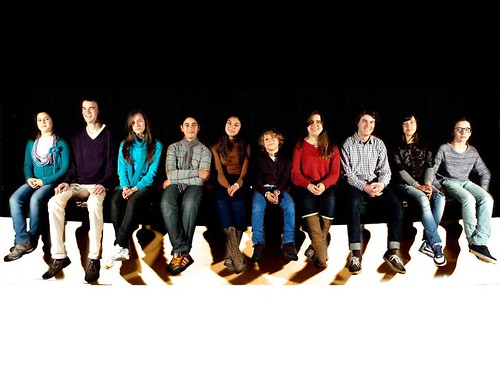
What are these kids waiting for (and who are they?)--find out soon when this year's "Best of Fado" list is published here!

18 December 2012

Essential Fado


The Facebook group "Fado in the US" is a good place to find information on fado performances in the US (though we are always looking for new contributions!). I asked the group's members for their essential fado recordings. Here are the responses, with the writer of the lyric and, sometimes, the singer who was mentioned*):
Carlos Conde
(follow the link for more)
  • Porta do coraçao (Carlos Conde)
  • Oiça lá Ó Senhor Vinho (Alberto James; as sung by Amália)
  • Barco Negro (David Mourão Ferreira)
  • Casa Portuguesa (Reinaldo Ferreira)
  • Primavera (David Mourão Ferreira)
  • Povo Que Lavas No Rio (Pedro Homem de Melo)
  • Canção do Mar (Ferrer Trindade; as sung by Dulce Pontes)
  • Coimbra (José Galhardo)
  • Bairro Alto (Nuno de Aguiar or Carlos Neves; as sung by Carlos do Carmo)
  • Lisboa, Menina e Moça (Ary dos Santos)
  • Fado da Sina (Amadeu do Vale; as sung by Hermínia Silva)
  • Rosa Enjeitada (José Galhardo; as sung by Hermínia Silva)
  • Mariquinhas (probably Casa da Mariquinhas, or maybe Leilão da Casa da Mariquinhas, or Mariquinhas Vai à Fonte,...)
  • Pomba Branca (Vasco de Lima Couto; as sung by Max)
  • Cabelo Branco é Saudade (Henrique Rego; as sung by Alfredo Marceneiro)
  • Ó Gente da Minha Terra (Amália Rodrigues; as sung by Mariza)
  • Tive um Coração, Perdi-o (Amália Rodrigues; as sung by Cristina Branco)
Thanks everyone! And please do join the group "Fado in the US" if you'd like to get plugged in to live fado in the US.

*More complete information is available at José Fernandes Castro's site, Fados do Fado.

30 October 2012

Prémios Amália

Every year, the Amália Prizes (Prémios Amália) are awarded to a selection of artists "in" or "out" of the fado. The jury is filled with some very good people. Below are the results from this year. Many of the names are recognizable from this blog, including Fábia Rebordão, Rodrigo, Rádio Amália, Carminho, and Ângelo Freire

The categories are roughly as follows ("dentro"="in", "fora"="out"): (A) Revelation ("new discovery") within the fado (voice, Portuguese guitar, viola), then outside the fado; (B) Album in and out; (C) Composition; (D) Poetry; (E) Career in and out; (F) Scholarship; (G) Dissemination; (H) Singer in and out; (I) Musicians (as above); (J) Fusion; (L) Discographic production; (M) Prestige; (N) International dissemination; (O) Tribute to Amália.

There's alot of great talent on this list. I'm not sure I agree with all the choices (half of the album by Alvim is not fado), but others are spot-on. Cidália Moreira and Rodrigo do not necessarily get the attention they deserve (E); Sardinha's book is controversial but interesting (F); Rádio Amália (G) and Carminho (H) are both excellent choices, as are those for the musicians (I)--all of whom are fairly young. Mísia was a surprise, as she has wandered for many years out of the fado (and out of Portugal), but tours tirelessly (N). Gonçalo--I don't know what the prize is for, but the guy has a good voice (O).


11 October 2012

If you're traveling soon to Lisbon...

Here is an event worth attending if you will be in Lisbon over the next couple of weeks. Fátima Fernandes is a stalwart of the fado scene, and on 28 October 2012 she'll be celebrating 40 years in the fado (as well as a new CD). The list of singers and musicians for this event is testimony to her renown: there are so many great artists on this list, it's mind-boggling. The event will take place at the Voz do Operário. This is a biggish hall (maybe a couple of hundred people)--but don't worry, it'll be full and homey. Here is Fátima at the Grupo Desportivo de Mouraria. Yes, approximately everyone is singing along to this. Parabéns Fátima Fernandes! Mereces isto e muito mais!


26 September 2012

Manuela Cavaco coming to New Jersey on 6 October

The Portuguese fadista Manuela Cavaco will be bringing the fado from Montijo, Portugal to Elizabeth, New Jersey on Friday, 6 October 2012. The concert is organized by the Fundação Amália USA, and will take place at the Salão Nobre next door to Nossa Senhora da Fátima (Our Lady of Fátima) church, which is located at 403 Spring Street in Elizabeth. The event begins at 6:30pm. Cost is $60 per person and includes dinner.

In addition to Manuela Cavaco, fadistas based in the Elizabeth area will perform, among them Pedro Botas. Accompanying these singers will be José Silva (guitarra portuguesa), Viriato Ferreira (viola), and Pedro Pimentel (contra bass), all of whom played early this year when Carlos Macedo visited here. I was there and they were great. The evening will also include a tribute to the late Cora d'Abreu, a fadista who performed for many years in and around Newark.

In a brief interview, Manuela spoke about her past and present contact with the Portuguese community in the USA. During one memorable visit, she got involved in an Açorean-style desgarrada--a sort of competitive back-and-forth between two or more singers--that lasted until four AM. She was so tired due to the time difference that every once in a while she would take a rest on the couch--but she never lost her place.

Her visit this time came about with a phone call to her home, and the person on the other line asking "Do you want to come to the US?" "What time is the flight?" she responded. The concert will benefit the Fundação Amália USA (named for Amália Rodrigues).

My recommendation is get your tickets now: Manuela was supposed to have come earlier this year but could not due to a travel snafu. For reservation and more information, call Margareth de Jesus (973) 332-3776 or Lídia Maio (908) 334-6640.

If you are on Facebook, look for Manuela. In addition to her web site, you can see and hear performances of hers on YouTube. Here is O Vento (The Wind), Avé Maria Fadista (Hail Mary, Fadista), and Fadista Louco (The Crazy Fadista). You want pure fado? Go!