30 October 2012

Prémios Amália

Every year, the Amália Prizes (Prémios Amália) are awarded to a selection of artists "in" or "out" of the fado. The jury is filled with some very good people. Below are the results from this year. Many of the names are recognizable from this blog, including Fábia Rebordão, Rodrigo, Rádio Amália, Carminho, and Ângelo Freire

The categories are roughly as follows ("dentro"="in", "fora"="out"): (A) Revelation ("new discovery") within the fado (voice, Portuguese guitar, viola), then outside the fado; (B) Album in and out; (C) Composition; (D) Poetry; (E) Career in and out; (F) Scholarship; (G) Dissemination; (H) Singer in and out; (I) Musicians (as above); (J) Fusion; (L) Discographic production; (M) Prestige; (N) International dissemination; (O) Tribute to Amália.

There's alot of great talent on this list. I'm not sure I agree with all the choices (half of the album by Alvim is not fado), but others are spot-on. Cidália Moreira and Rodrigo do not necessarily get the attention they deserve (E); Sardinha's book is controversial but interesting (F); Rádio Amália (G) and Carminho (H) are both excellent choices, as are those for the musicians (I)--all of whom are fairly young. Mísia was a surprise, as she has wandered for many years out of the fado (and out of Portugal), but tours tirelessly (N). Gonçalo--I don't know what the prize is for, but the guy has a good voice (O).


11 October 2012

If you're traveling soon to Lisbon...

Here is an event worth attending if you will be in Lisbon over the next couple of weeks. Fátima Fernandes is a stalwart of the fado scene, and on 28 October 2012 she'll be celebrating 40 years in the fado (as well as a new CD). The list of singers and musicians for this event is testimony to her renown: there are so many great artists on this list, it's mind-boggling. The event will take place at the Voz do Operário. This is a biggish hall (maybe a couple of hundred people)--but don't worry, it'll be full and homey. Here is Fátima at the Grupo Desportivo de Mouraria. Yes, approximately everyone is singing along to this. Parabéns Fátima Fernandes! Mereces isto e muito mais!


26 September 2012

Manuela Cavaco coming to New Jersey on 6 October

The Portuguese fadista Manuela Cavaco will be bringing the fado from Montijo, Portugal to Elizabeth, New Jersey on Friday, 6 October 2012. The concert is organized by the Fundação Amália USA, and will take place at the Salão Nobre next door to Nossa Senhora da Fátima (Our Lady of Fátima) church, which is located at 403 Spring Street in Elizabeth. The event begins at 6:30pm. Cost is $60 per person and includes dinner.

In addition to Manuela Cavaco, fadistas based in the Elizabeth area will perform, among them Pedro Botas. Accompanying these singers will be José Silva (guitarra portuguesa), Viriato Ferreira (viola), and Pedro Pimentel (contra bass), all of whom played early this year when Carlos Macedo visited here. I was there and they were great. The evening will also include a tribute to the late Cora d'Abreu, a fadista who performed for many years in and around Newark.

In a brief interview, Manuela spoke about her past and present contact with the Portuguese community in the USA. During one memorable visit, she got involved in an Açorean-style desgarrada--a sort of competitive back-and-forth between two or more singers--that lasted until four AM. She was so tired due to the time difference that every once in a while she would take a rest on the couch--but she never lost her place.

Her visit this time came about with a phone call to her home, and the person on the other line asking "Do you want to come to the US?" "What time is the flight?" she responded. The concert will benefit the Fundação Amália USA (named for Amália Rodrigues).

My recommendation is get your tickets now: Manuela was supposed to have come earlier this year but could not due to a travel snafu. For reservation and more information, call Margareth de Jesus (973) 332-3776 or Lídia Maio (908) 334-6640.

If you are on Facebook, look for Manuela. In addition to her web site, you can see and hear performances of hers on YouTube. Here is O Vento (The Wind), Avé Maria Fadista (Hail Mary, Fadista), and Fadista Louco (The Crazy Fadista). You want pure fado? Go!


23 August 2012

Good-bye to a good friend

A good friend and fadista from Portugal, José Maria Fernandes, died very recently. I wrote this short piece about him, our friendship, and the fado. I'm going to try to find time to translate it, but in the meantime (knowing that some of you speak Portuguese), here it is (text is taken from my other blog, http://fado-hoje.blogspot.com).


Venho por aqui falar de um grande amigo e fadista, José Maria Fernandes, que faleceu há uma semana. A nossa amizade foi criada juntamente com o fado, ou talvez seja melhor dizer que quanto mais que conhecíamos, mais que compreendi sobre o fado e a bondade que pode ser criado dentro do âmbito fadista. Quando vim com a minha família à Lisboa há alguns anos--sem saber nada do fado actual--foi ele que me introduziu ao mundo fadista que agora faz parte imutável da minha vida.

Na altura quando lá vivíamos, frequentávamos a Baiuca em Alfama. Pouco a pouco, eu ia conversando com os fadistas, os músicos e as outras pessoas que por ali passavam. Gostei de ouvir o José Maria cantar, mesmo que os clientes conversassem tanto durante o fado. O José Maria cantava os clássicos, os fados associados com os fadistas que ele apreciava mas que se encontrou fora da moda, como o Fernando Farinha ou o Tony de Matos. Ele cantava de amor e de solidão. Era romântico, sem desculpas.

Comigo não queria falar da sua vida privada. Um dia perguntei-lhe" "Aonde trabalha?" Respondeu enigmaticamente: "Trabalhava em Alcântara..." Percebeu perfeitamente o que eu tinha perguntado, mas não queria entrar no assunto, nem me ofender. Para muito tempo, só sabia que era "da outra banda."

Ele vadiava de casa em casa em Alfama, uns dias por semana. Encontrei-o muitas vezes na Baiuca, e anos depois também frequentava o Sr. Fado. Como muitos outros fadistas, não queria ganhar dinheiro, só queria era cantar e conversar com amigos durante os intervalos ou quando esperava por sua vez. Fomos uma vez a um território distante–a Graça–para visitar a Tasca do Jaime. Pôs-se em pé, introduziu-se com humildade, agradeceu a dona, depois cantou dois fados do coração. Gostou, mas percebi que o seu povo, e os seus lugares de hábito, eram todos de Alfama. Por outro lado, sempre ia conosco por qualquer lado: às outras casas de Alfama, à Mouraria.

A manter a ordem à porta da Baiuca

Uma vez telefonei-o, e atendeu ao telefone bruscamente, como sempre. "Ó Zé, aonde está?" Estava na casa do Sr. Henrique, no sul do país. "A fazer o que?" perguntei eu. A ajudar nisto ou naquilo, depois ele ia regressar à noite para trabalhar no dia seguinte. Outras vezes, estava indo para Angola. Sempre a vadiar...

Queria que nos fôssemos portugueses: eu, a minha esposa, e os meus filhos. Ajudou-me com a burocracia portuguesa, inventou planos fantásticos para que eu conseguisse manter uma presença permanente em Portugal ("compre um apartamento", "troque o seu trabalho", etc.). Fizemos percursos de pê e de carro por várias zonas de cidade. Não era jovem, mas andou sempre velozmente, cheio de vontade para chegar.

Uma vez que visitamos Lisboa, queria buscá-nos no aeroporto. Disse-me que tinha um carro que servia.  Não acreditava. "Cabe, cabe. Não se preocupe", respondeu o meu amigo. Chegou com um Citroën antiquíssimo, que não foi nada grande. Mas ele não queria saber nada das minha dúvidas. De uma magia qualquer, conseguiu meter tudo lá dentro--cinco pessoas e todas as malas. Depois da visita, ao regressar ao aeroporto, ofereceu-me uma caixa de discos do fado. Não o queria, mas disse "Trago sempre uma commigo, e vou dando-a quando me apetecer, depois compro mais uma." Assim, o fado e ele andava sempre a par.

Quando eu estava fora de Portugal, telefonava-o por Skype, e por isso ele não reconhecia o número. Quando atendeu ao telefone, dizia "Alô", duma maneira brusca, que transmitiu uma mensagem clara: "Como é que vais explicar esta intrusão?" Eu respondia, "Ó José Maria, é David Mendonça." "Ó David, como está amigo!" E depois era tudo alegria. Mesmo na rua, eu nem sempre percebia quando ele sentia pró ou contra alguém, pois resmungava à frente de todos.

Na Tasca do Jaime

O José Maria vivia com o fado sempre no peito. Quando falávamos, às vezes exprimia os seus sentimentos em termos fadista, sem pretensões e como se fosse a sua própria linguagem. Queria ensinar-me toda a história do fado que conhecia, a qual assisti com toda a minha atenção. Introduziu-me ao mundo ocupado por aquelas pessoas que vivem para o fado, e não através do fado. O fado do José Maria era um fado puro, que refletia uma sensibilidade profundamente humana, cheia de honestidade, e que não aceitou a falsidade.

A última vez que o vi foi recentemente. Estávamos em Lisboa para uma curta visita. Já tinha percebido que não estava bem. Falamos brevemente por telefone, mas foi preciso confirmar os pormenores com a filha dele. (Logo descobri que ele sofreu bastante só para lá chegar.) Estava sentado à porta da Baiuca, com muitos amigos ao seu redor. "Vou cantar" disse ele. A filha protestou, também eu. "Quero." Pediu desculpas da minha esposa por não ser capaz de cantar "Leio em teus olhos", que sempre cantava para ela. Ia cantar outra coisa, então pôs-se de pé. Num instante, a Baiuca e tudo que não era o meu amigo evaporou. Cantou "Senhora da Nazaré" do fundo da alma, com toda a força da vida, com muito mais força do que o corpo tinha. Depois saiu subitamente: estava gasto. Depois falamos para uns minutos, mas foi a última vez que o vi. Era tudo pelo fado, e tudo por amizade.

21 August 2012

Backlinks...

For about the past year, two news outlets--the Luso-Americano and the Portuguese-American Journal--have been publishing some of my writing about the fado (and, occasionally, other Portuguese-related themes). Both have mentioned this fado blog, as well as the one I write in Portuguese. So, it's only fair that I say a bit about each of them!


The Luso-Americano is a Portuguese language print newspaper, founded in 1928 and published in Newark, New Jersey.  With the widest print distribution of any Portuguese-language newspaper in the USA, it covers Portuguese and Portugese-American news items. Lately, the journalist Ricky Durães has been writing some great stuff about the fado, particularly in the NY metro area, covering many of the area's larger and smaller fado performances and related events. Indeed, the Luso-Americano is probably the first best place to look for news and upcoming events on the fado (and other Portuguese music) along the east coast. For example, did you know that Ana Moura is coming to Durham, North Carolina on 29 March 2013, or that Deolinda will be in Chicago on 24 September?

I should also note that, in addition to news, the Luso-Americano publishes various essays and opinion pieces. These include an excellent, very long-running series written by Ferreira Moreno, centered on Portuguese culture and folklore. The paper also has an English language section. You can subscribe to receive it by post, or read a slightly delayed copy online. I am currently working on a Portuguese-language essay for them on the topic of contemporary poets and the fado.


The Portuguese-American Journal is a fairly recent endeavor, published in English. The journal is "dedicated to the Portuguese-American heritage with the purpose of informing and offering an insight into the Portuguese-American experience."Its editorial scope is broad, with new articles published frequently. It's available through Google News feed, as well as through its own web site. The most recent article I wrote for them is a review of Sandra Correia's new album, "Ao Vivo".

11 August 2012

More on "Fado&Piano"


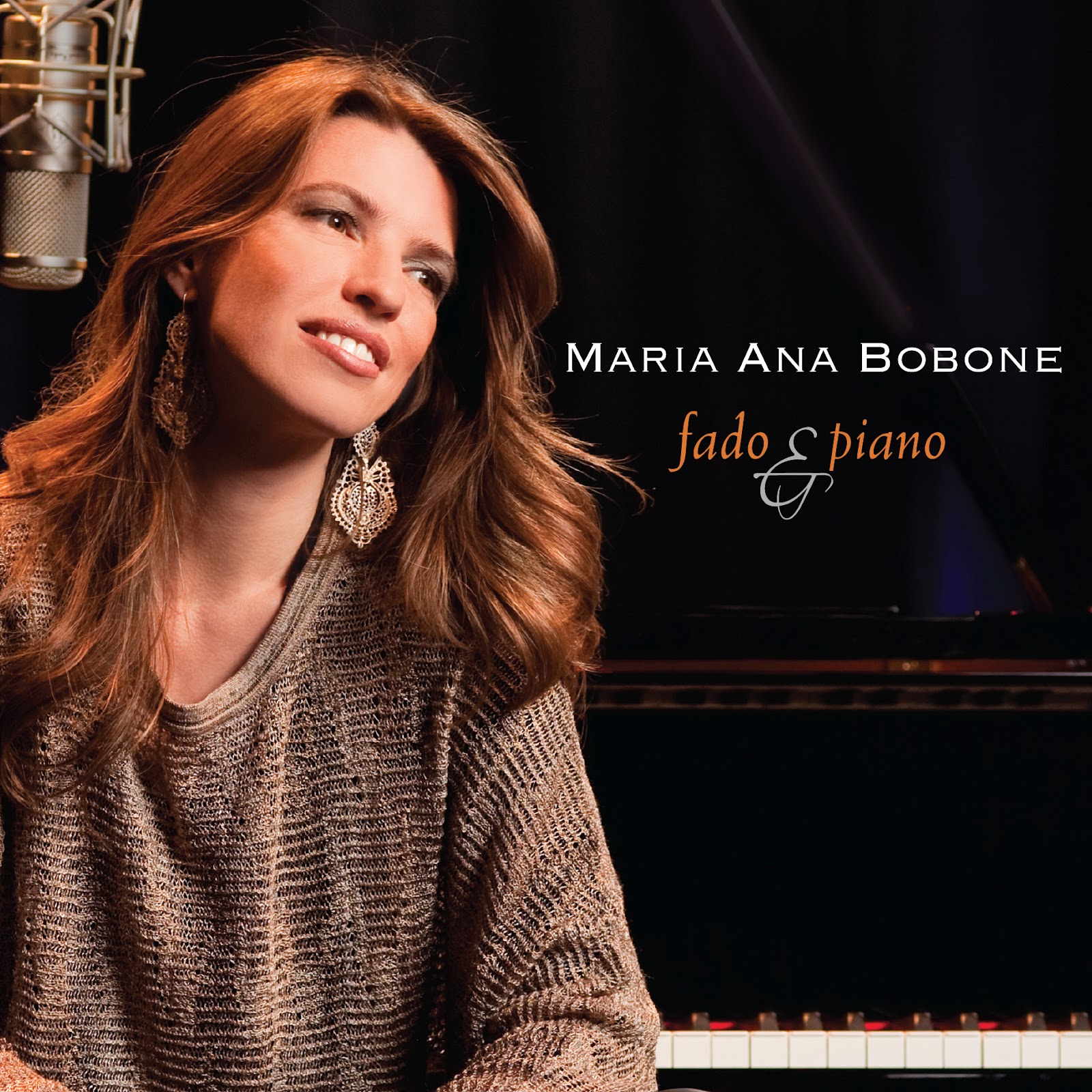
Here's a very informative comment on the latest Maria Ana Bobone record, written by one of the readers of this blog, Aldemar Fernandes Parola. (Note: version in Portuguese is below.) I hope you enjoy it!

'In my opinion fado for voice and piano is not a new hypotesis. What is new in “Fado & Piano” is the fact that Maria Ana Bobone plays piano and sings simultaneously. Few singers have the knowledge, the ability and the art to play piano and sing simultaneously. Since fado and the majority of the portuguese traditional songs are a kind of ritual music, transmiting feelings and emotions, the control of the cadence is extremely important and to have control on the cadence nothing better than to have one person playing and singing.

'Piano was already used in her second CD, “Senhora da Lapa” as an accompaniment for the majority of the tracks but it was played by João Paulo, another virtuoso, composer of the beautiful melody of “Senhora da Lapa” score.

'In the first CD of Maria Ana Bobone, named “Luz Destino”, published in 1996, which was more audacious than “Fado & Piano” due to the arrangements with a barroque sonority made by Ricardo Rocha, she was accompanied at the harpsichord by João Paulo, at the portuguese guitar by Ricardo Rocha himself and in some scores at the contrabass by Mário Franco.

'May be “Fado & Piano” will be more popular than the previous CDs because at first sight it looks less sophisticated. But in my opinion this is not true. In spite of sophistication and simplicity being considered as opposed, all Maria Ana's CDs, including “Fado & Piano, are simultaneously simple and sophisticated. Is there something simpler than fado and piano? On the contrary is there something more sohisticated than voice conveing both excitement and joy in a quiet way accompanied on the piano with a harmonious arrangement ? Schubert's “lieder” are certainly good examples of the combination of simplicity and sophistication and I believe “Fado & Piano” is also another good example.'

--Aldemar Fernandes Parola

Versão em português: Na minha opinião fado para voz e piano não é uma hipótese nova. O que há de novo no "Fado & Piano" é o fato de Maria Ana Bobone tocar piano e cantar ao mesmo tempo. Poucos cantores têm o conhecimento, a habilidade e a a
rte de tocar piano e cantar simultaneamente. Como o fado e a maioria das canções tradicionais portuguesas são um tipo de música ritual, transmitindo sentimentos e emoções, o controle da cadência é extremamente importante e para ter o controle sobre a cadência nada melhor do que ter uma pessoa tocando e cantando.

Piano já foi usado como acompanhamento em seu segundo CD, "Senhora da Lapa" tendo sido interpretado por João Paulo, outro virtuoso, compositor da bela melodia da canção "Senhora da Lapa".

No primeiro CD de Maria Ana Bobone, chamado "Luz Destino", publicado em 1996, que foi mais audacioso do que o "Fado e Piano", devido aos arranjos com sonoridade barroca feitos por Ricardo Rocha, ela foi acompanhado ao cravo por João Paulo, à guitarra portuguesa pelo próprio Ricardo Rocha e em algumas das canções por Mário Franco ao contrabaixo.

O CD Fado & Piano de Maria Ana Bobone certamente será mais popular dos que os anteriores por uma única razão: aparenta ser menos sofisticado. Mas, na minha opinião isso não é verdade. Embora sofisticação e simplicidade sejam considerados como opostos, todos os CDs de Maria Ana, incluindo "Fado & Piano, são ao mesmo tempo simples e sofisticados. Existe algo mais simples do que voz acompanhada ao piano? Haverá algo mais sofisticado do que a voz transmitindo tanto emoção como alegria de uma forma serena acompanhada ao piano com um arranjo harmonioso? Os "Lieder" de Schubert são certamente bons exemplos da combinação de simplicidade e sofisticação e eu acredito que "Fado e Piano" também é outro bom exemplo.

31 July 2012

Fado and piano??? OK, maybe this one time!

Maria Ana Bobone has a new record out--fado and piano. I've heard this sort of thing before--or thought I had. I went once to hear a live performance with two guitarists, one pianist and one singer--all top-notch. Total disaster. Tonally, it was a three-way fight, but perhaps they hadn't done enough practicing to enable them to compose dialogue in real time. In any case, I've never heard the combination yield good results.

Until now, of course. Maria Ana Bobone has arrived with a new hypothesis: fado for voice and piano, accompanied on some tracks by a contrabass and/or (ahem) a guitar. The voice+piano combination is not so revolutionary, as Amália Rodrigues herself experimented with it, but that was different (this was work with Alain Oulman during recitals, and I believe the "formal" recorded output is pretty small.) There's also a theory that fado was "originally" performed with voice and piano, but that is an argument for another day!

Back to this record. Perhaps because Maria Ana Bobone is both playing and singing, I think the combination works perfectly well here. Admittedly, I've not heard the whole record, but--if the combination was going to fail--it would have failed on the tracks I heard. The piano playing is heartfelt, deeply steeped in the fado, and the voice is crystalline. Somehow I'll have to get my hands on a complete copy (looks like it's available through the US-based iTunes). For the moment, here's a video that showcases her art. If anybody has heard the whole record and wants to comment, please do!


Que Deus Me Perdoe

14 July 2012

Day 5 in Lisbon

Walking through the Alfama this evening, we stopped to talk with Carlos Macedo during one of his breaks at the Taverna del Rey. Macedo is known as a pretty serious guy, but those who have seen him live know that he has a humorous side. For example, during his recent visit in Newark, he sang "Zanguei-me com a minha sogra" ("I got mad at my mother-in-law"), a very dry and funny riff he wrote to the tune of "Zanguei-me com meu amor", the latter popularized by Amália Rodrigues. Unfortunately, this is not something he has ever recorded. During our conversation, he mentioned one of his lyrics--"Um governo à portuguesa"(lyrics here) that he has recorded--to the tune of "Uma casa portuguesa". As Carlos explained, the humoristic side of the fado has been around for quite a long time--though it has certainly fallen out of favor (along with political fado--a point that was strongly made by José Manuel Osório in many interviews). There are a few fadistas who sing exclusively humoristic fado these days, including the great Zequinha. We did not get to hear Carlos singing this night--but watch for a later report on the night that we did.

We (including my wife and children) then visited the Esquina d'Alfama. The elenco, after making a whirlwind and very successful tour of Europe (see poster), was a bit different than it was for that tour--but the vibe was just as good. On Portuguese guitar was Gentil Ribeiro (back to the Esquina after a sojourn that included the Bairro Alto), and on the viola, Júlio Garcia. For this trip, I planned next to nothing, and the improvisatory attitude was beginning to pay off. Pedro Galveias was there. Also singing were the stalwarts, Ricardo Mesquita and Lino Ramos, along with Cátia Garcia. The Esquina is a very informal and open place. The food and the fado are good, and there is no pressure put on you to eat and get out. While there do tend to be tourists there, they tend to be respectful and appreciative of the fado. The evenings start early at the Esquina, and there are always plenty of pleasant surprises--particularly early in the evening. It can get a bit rowdy at times, but once the fado starts getting serious, Lino or somebody else will calm down the crowd. All of these factors help make the Esquina a house that we visit at least a couple of times whenever we are in Lisbon.

Speaking of children and the fado, one of the many CDs I picked up in Lisbon was Saudade no Futuro.  This is a record performed entirely (music and singing) by younger Portuguese kids. There is alot of talent in this group, and it is used quite wisely. If you are interested in the fado, and want a way to introduce it to younger listeners, this is the record for you. My kids--who frankly get a bit tired of the fado at times--asked to hear this record repeatedly, and read the liner notes (full credits and everything) until they had settled on their most preferred singers and musicians. The CD is even available in mp3 format on Amazon (in the US!) if you search for the title "Fados Dos 8 Aos 17 Anos". Highly recommended (watch for a full review in the near future on the web site of the Portuguese-American Journal)

23 May 2012

Day 4 in Lisbon (revised and expanded)

O casal Jaime Pedrinho
In the morning I took my want list in hand and headed to the Feira da Ladra to buy some music. There is only one vendor I pay attention to--Jaime Padrinho. He is easy to find: his stall is always at the northern end of the market, and he is usually playing something by Amália Rodrigues (often very loud, often the same fado multiple times). Works like a charm. I have spent many hours there, and his method never fails: put on Amália singing "Estranha forma da vida" and the tourists will show up to ask "Who is this?" Within seconds they are buying a copy of "O melhor da Amália".

To the side of the CD table he has a small but very respectable selection of vinyl and cassettes. That is where the real action is. Sr. Padrinho has all the qualities of a great record seller: tasteful stock, understanding of the customer, the appropriate degree of detachment. In fact, it was he who first recommended that I listen to Artur Batalha. This time, he recommended an LP from Vasco Rafael. When I returned to the US, I put it on: this is a singer who had a very big, earnest sound. It's a top flight record in the castiço tradition.  I also picked up a 45 of Fernando Farinha--brilliant as always.


Later that evening, after many months of trying, the opportunity had finally arisen to interview Mário Raínho, an iconoclastic poet of the fado. Raínho has written lyrics for many singers, ranging from Fernando Maurício to Ana Moura, and is outspoken about the critical importance of poets and lyricists to the continued vitality of the fado. This importance is partly a consequence of the nature of the art form. The "fado tradicional" (traditional fado, or, perhaps more appropriately, the fado estrófico--or strophic fado--as the guitarist José Pracana has referred to it) consists of a smallish number of musics. The "fado tradicional" approach to the fado therefore requires new lyrics set to works within this corpus of music if the form is to survive, or at least not become stale. Another force at work here is the simple fact that there are lots of people who go out and sing multiple times every week--and many more who go out to here these same people every week. And when I say "every week", I mean it. Now, do you really want to hear the same three lyrics from the same singer every week? Hence, the poet.

Mário Raínho
Raínho has recently become involved with organizing fado at a small restaurant called "Pérola do Fado", (Pearl of the fado) and this is where we met to discuss his work. The interview produced a lot of material, though we only spoke for 30 minutes. One interesting tidbit: Mário began as a singer, who eventually wanted different lyrics to sing, and thus began his career as a poet. Pick up any current fado record, and the chances are good that at least one of his lyrics is included.

Miguel Ramos
The Pérola's location is "out"--not in Alfama, not in the Bairro Alto, not anywhere near the tourist track--but actually not at all far out of town. Maybe this is how it's going to be for a while: the fado is going to hide in the hills until the craziness over the UNESCO designation dies down. Judging by the results of this evening, if you're willing to venture just slightly beyond the standard confines, there are some beautiful moments to be had.

Pérola is divided into two spaces: café in the front, restaurant in the back. The fado happens in the back. Dinner was great and not at all expensive. The musicians for the evening were Paulo Jorge (gp); André Ramos (vb)--more evidence of the small world of the fado as he is the brother of the singer Miguel Ramos; João Moreira (vb); and, later, António Oliveira (vb).


As I learned, the singers and musicians were all essentially professional: many of them had "other jobs" but were here for the night to sing for each other, and for others with a very strong appreciation of the fado. The repertory and style of playing were nothing like what you would hear in the first hour or two at the typical fado joint: they got right to the heart of the matter.

Miguel Ramos was the first singer. He delivered a powerhouse performance--quite different from the subdued one I expected. Unfortunately, I do not have any recording whatsoever of his performance: I was too flabbergasted to do anything. Buy the record! Next was Ana Sofia Varela. Her voice was really not with it this evening: seemed like she had something perpetually stuck in her throat. Next was Jorge Aguiar, followed by Jorge Nunes (mp3) (the son of Jorge Fernando)--instantly recognizable by his voice.

Now an intervalo. As I ventured outside, Artur Batalha was just arriving. "It's the first time I've been here", he said. At some point I asked Mário if he could somehow squeeze Batalha into the lineup before we had to leave. He said he'd try. In truth, it was not a very fair request, as the house was full of fadistas who had been waiting for their turn to sing. But I was beginning to feel desperate. The next singers Nelson Lemos and  Sónia Santos (mp3). Here is a fairly recent video of her from RTP. Judge for yourself: I liked her quite a bit. Then that was it: we had to leave.

To give a flavor of his work, here is a translation of a short lyric of Mário's, most associated with Fernando Maurício, entitled "A minha oração" ("My prayer"). Many thanks to Mário himself for providing the lyrics and the translation.


15-May-12


19 May 2012

Day 3 in Lisbon

Jaime Nunes
Settling in to the groove... Visited the Tasca do Jaime for the first hour of the afternoon. The musicians were Paulo Silva (gp) and Carlos Fonseca (v), who were later joined by the owners' son, Duarte Nunes (v). They opened with a guitarrada. Jaime sang, followed by César Caixinho, João Soerio and Bruno Horta. Below are two videos from João and one from Bruno, respectively. Those who are familiar with João's work will notice a more refined style to his singing here, particularly in his attention to the lower end of his range, as well as a more relaxed and confident approach to the lyrics. The change is conscious. I am looking forward to a couple of musical surprises from João this year. He is sounding great.

Scroll down for the rest of the story from today...


Miguel Ramos at
Mesa de Frades
Later that evening I met with the singer and musician Miguel Ramos, to discuss his life and work in the fado, focusing in particular on his new CD, which he is in the midst of recording. This was a follow up from my earlier conversation with his brother, André--himself a musician. The interview is going to take a bit of time to write up, but I want to note a couple of things here. Miguel's record sounds very promising, with nearly all original lyrics (by various lyricists), and mostly all classic fado with a few musical fados. The personnel are top notch and varied. Our conversation covered his early years, including his time spent under the tutelage of Fernando Maurício, and his training and ongoing work as a musician and singer. I had an opportunity to hear him the following evening at the Pérola de Fado--but more about that in the next writeup!