28 March 2012

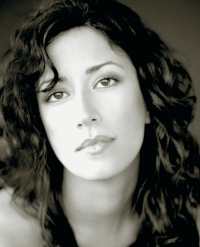
Nathalie Pires


I spoke recently with the Luso-American fadista Nathalie Pires. I invited her to discuss her life within the fado for this blog and she responded with this great essay. I hope you enjoy it!  -DM


by Nathalie Pires

When interviewed, I have yet to meet a reporter who doesn’t ask me, “What is Fado”? I always give what I feel is a generic answer: Fado translates to fate or destiny, and it is also a genre of music that many explain as an “urban folk music” that is unique to Portugal. But what Fado is to me personally is an energy inside of me that longs to be released. There is a different Fado for every emotion I have ever felt, and countless Fados I could almost swear were written specifically about my life experiences. There is no other genre of music I can identify myself with.

But I didn’t always feel this passionate about the “Portuguese blues”. In fact, I remember being a child and my parents dragging me to Fado nights at the local Portuguese clubs. We’d be there for hours listening to what seemed like old women dressed in all black, crying and complaining in song all night in candle light with a constant steady cloud of cigarette smoke hanging over the whole room. My intuitive recognition of this ambience wasn’t a positive one, and I thought of Fado as “old people music”. That is, until years later: April of 1999, when I was invited to sing at a Fado night in my hometown of Perth Amboy in New Jersey.

In preparation for my performance, my father gave me a 2-disc album of Amália Rodrigues’ greatest hits and my mother bought me my first black shawl. I learned 3 fados with lyrics that we felt weren’t too heavy for a 13 year old girl. I sang for the first time accompanied by a classical and Portuguese guitar in a dark room, in front of a quiet and very intense crowd. The whole time I felt extremely intimidated by the attentive audience, hypnotized by the sound of the guitars, overwhelmed by the emotion these Fados demanded of me, yet in complete control of my performance. That night I discovered the power of Fado: the audience’s support and reaction was my driving force to pursuit being a “Fadista.”
Nathalie at 14
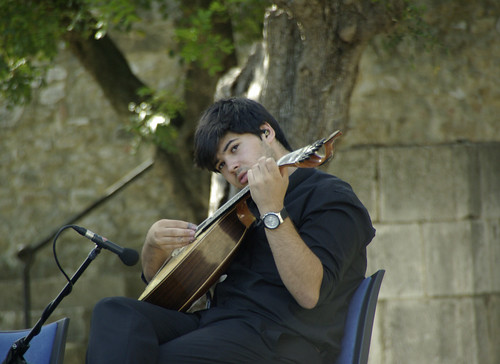
Paulo Jorge (L) and Carlos Fonseca (R)

That September, I mourned the death of Amália Rodrigues along with all of Portugal. My greatest idol had passed away and Fado entered a dark period. Many in Portugal were convinced that Fado was going to die out along with the passing of the Portuguese icon. I, however, was born and raised in the United States where every Portuguese immigrant or luso-descendant I knew were super proud of their roots and extremely dedicated to keeping our traditions alive--including Fado. So, I continued to learn more Fados and was little by little becoming more popular within the Portuguese community. Word was spreading that there was a young girl singing Fado and crowds would curiously gather to listen because it was so unusual for someone so young to sing such deep topics. But I did, and although I couldn’t relate to every lyric I sang, I was extremely dedicated to my new pastime.

As I got older, I sang Fado with growing confidence. I grew closer to my guitarists, who helped me select my repertoire and choose the right keys for my maturing voice. I became more familiar with my audience, and with the Fados that we connected to the most. Before I knew it, my schedule was getting busier and busier with frequent performances along the east coast and even Canada. This was one of the most rewarding times of my career because I got these opportunities simply by “word of mouth”.

In 2007, I recorded my first album Corre-me o Fado Nas Veias ("Fado runs in my veins"), thinking it would be a nice keepsake. To my surprise, the album was released with huge success and even had a hit original single in California called “Festa Brava a Portuguesa” which was written by my father, Telmo Pires. It was awarded “Album of the year” by United Artists of America. Before I knew it, I was busy touring Portuguese clubs, restaurants and associations around the country. Some of my other performances included one at the United Nations, where I represented Portugal for ambassadors from all around the world. I also sang for the Vice President of the Portuguese Republic at the Boston State House, at Portugal Day in Central Park in New York City, at SOUNDshift International Music Festival in New Foundland (Canada), and at Brooklyn Academy of Music’s Next Wave Festival’s “Tudo Isto é Fado”.

Brooklyn Academy of Music (2011)
I have also performed in some of the most prestigious Fado houses in Lisbon:  Sr. Vinho, Bacalhau de Molho, O Faia, Mesa de Frades, Taverna d’el Rei, and Clube de Fado. I was honored to be invited to sing at the VI Gala Amália award ceremony. I also took part in the celebration of UNESCO's  announcement at the “Museu do Fado”, with António Parreira (guitarra portuguesa), Guilherme Carvalhais (viola) and Armando Figueiredo (baixo). Fundação Amália also recognized my accomplishments as a Portuguese-American fadista with a medal, and claimed me as an ambassador of the fado in the United States.

Clube do Fado, Lisbon
Mário Pacheco (L) and Ricardo Cruz (R) [Miguel Ramos (viola) not pictured]

But my most rewarding performances are by far my weekly gigs in New York City. I enjoy singing without amplification in the intimate environment of 30-50 people of diverse ethnicities. I love it when the audience interacts and asks me about the poems and emotions that I’m interpreting and questions the roots of the Portuguese guitar. Sometimes it’s even overwhelming for the audience as I recall one time an Italian man who was in the City on vacation cried uncontrollably even though he claimed he didn’t understand the language but he explained that he imagined what he felt I was singing through my expressions. For an artist, nothing can top that.

Singing in Manhattan has also given me opportunities outside of Fado. I met Tim Ries, one of the best saxophone players in the world, who has also toured and recorded with the Rolling Stones. After listening to my album, he invited me to perform at Highline Ballroom in New York City, and then in Austria. I sang two songs that he had recorded with Ana Moura for his album “Tim Ries and The Rolling Stones Project”, where he adapted the Rolling Stones hits “No Expectations” and “Brown Sugar” with Fado influences. That experience was surreal.

At Red Bulls Stadium
I also had the opportunity to sing the Star Spangled Banner at the New York Red Bulls Major League Soccer season opener in their stadium with over 20,000 enthusiastic fans. That was the most exciting/nerve-wrecking performance of my life! Singing in Manhattan also gave me the opportunity to meet Pedro Henriques da Silva, co-founder of the “Manhattan Camerata” where I am occasionally featured during many of their concerts and even their debut album. I am also actively involved in their Tango-Fado Project, which also features Grammy nominee Daniel Binelli, one of the world’s best bandoneon players. Being accompanied by an orchestra has definitely been one of the highlights of my career.

Anita Guerreiro
I’m also proud to share that living Fado legend, Anita Guerreiro is my godmother (madrinha) of Fado. She gave me this honor in front of an audience in 2008. She has just celebrated 55 years in her career yet gives me the upmost support and respect.

But some of my most fulfilling experiences in Fado weren’t during my performances at all. One time I was listening to Fado while driving on the NJ Turnpike and as I was reaching out to pay the toll, the man in the tollbooth stuck his head in my car when he realized what I was listening to and exclaimed that he was a huge Fado fan without even knowing who I was! Meanwhile, the drivers behind me started to honk their horns and interrupted our unusual encounter. Another time, I was set to perform in a festival in New Bedford, NJ and without ever meeting me before then, an American man gave me a Fernanda Maria LP that he had found at a thrift shop simply because he wanted to give it to someone “who would appreciate it”. I appreciated it even more because of his kind gesture. Even at my own wedding, as my husband and I celebrated with our guests, almost everyone requested that sing. So I did. Overall, the continued support I get makes it all worthwhile. It is both inspiring and motivating. It’s extremely draining juggling my professional career as a fulltime accountant while being so dedicated to Fado. I justify it by accepting that accounting is my reality and Fado is my therapy.


Through all of my experiences, Fado transformed from being a pastime to a responsibility, but always my passion. Besides from the satisfaction it gives me as a performer, the poems that I sing have taught me so much about Portugal and I’m proud to share our music with an audience that I can connect to. I’m often asked why I think Fado is so successful in the United States. My answer is because I’m singing about life, Portugal and of course “saudade”. What Portuguese immigrant or descendant doesn’t relate to that? And for those that listen to Fado and don’t speak Portuguese, I believe enjoy it for the emotional thrill they get from the musicians. For that simple reason, I am proud to be a “luso-american fadista”. I never dreamed of accomplishing all that I have with Fado. I truly believe Fado is my destiny and the more life throws at me, the more natural it is to me. It is my mission to continue to spread Fado to whoever is willing to listen!

with Carlos Macedo
Future performances that I’m looking forward to include:

  • 4/7: Clube Acores, Newark, NJ w/ Carlos Macedo 
  • 4/19: North Virginia Community College (Performance & Workshop)
  • 5/14: Kennedy Center, Washington, D.C.
  • I also perform every Wednesday night at Alfama Restaurant in NYC. www.alfamanyc.com
  • For more performance dates and info visit www.nathaliepires.com. 


20 March 2012

FADOS by Saura: A high-class cultural hijacking


Now that FADOS--a 2007 film by the Spanish director Carlos Saura--is available in the US via Netflix streaming, this seems a good time to call the film what it is: a high-class cultural hijacking. Over the years since its release, Saura has cast it as a film "about" the fado, one that, according to the liner notes, draws on its "history" and its "contemporary expressions."

By the same logic, I can probably make a good argument for "Austin Powers" as a handbook for international espionage. But this would be unjust: unlike FADOS, the Austin Powers films present themselves a nothing other than elaborate confections.

With FADOS, Saura has rebranded the fado as a distinctly non-Portuguese drums-n-dance affair. Here,  the brightest signs of life (and biggest glimmers in the director's eye) are musical expressions that are as at home in the fado as Austin Powers would be behind real enemy lines.

The central conceit of the film is the Afro-brasilian hypothesis for fado's origin, which provides Saura with just enough fuel to open his film with a booty-shaking, drum beating affair. Next is a very respectable guitar duet which, not unsurprisingly, sounds nothing like what you just heard. Mariza, one of fado's current cultural emissaries, follows with the song "Transparente", arranged with electric guitars and drums. Toni Garrido next sings a pop song accompanied by piano and percussion, with a few cloying dancing girls in the background to butter up the visuals.

It is worth noting at this point that the typical musical setup for the fado consists of one singer, one player of the Portuguese guitar (12-strings) and one player of the viola (6-strings), as shown in the next performance: a fado menor do Porto, sung by Camané in fine form. While the music is great, Saura removes all other traces of life and vitality from the scene. This is the blueprint all but a few minutes of "real" fado in this film: actual fado singers and musicians are injected into bleak, cold, monochrome boxes, stripping them of the life force that has sustained the form thrive through wars, fads and, now, wrongheaded directors.

"I'll take it from here."
The next major movement in the film is centered on Maria Severa, a fadista of the early 20th century, in which the "Fado da Severa" is reimagined as a schoolroom lesson on her mythology. But perhaps this scene is better read as a war room briefing, with Saura collecting intelligence on the enemy in order to plot his next move.

The next fadista into the antiseptic box is Cuca Rosetta, here singing "Rua de Capelão" with Mário Pacheco on guitar. As with Camané, the visuals of the scene convey a clear message: if you want to see the life in the fado, look beyond this archaic arrangement.

The first man on Saura's hit list is the great Alfredo Marceneiro, a deeply influential figure in early 20th century fado. The film shows a snippet of video of Marceneiro singing, which is just enough to merit putting Marceneiro's name on the credits, then offers a new take on his heritage: the Marceneiro rap. Turntable, rhymes--it's all there. I think the fist-pumping that follows the rap is of approximately the same duration as that of Marceneiro's singing. I can say with complete confidence that this is not a scene that you will ever see in any place where the fado "happens".

Carlos do Carmo appears to sing "Um homem na cidade", a classy song that is, curiously, filmed with a respect for the music: there is no dancing, no rapping, and the visuals are lush scenes of Lisbon projected all around the singer. The contrast between this presentation and the one made of Marceneiro's work (and indeed of nearly all the other fadistas in this film) is striking for the mockery it makes of fado history.

The veteran Argentina Santos is the next to enter the operating room, here to sing "Vida vivida." Despite the frankly brutal staging of this scene, Santos triumphs. I don't think there is anything that Saura (or any one else) could do to topple this woman's FADO.

The remainder of the film hunts down all the remaining suspects. To help you forget Argentina Santos, Saura invokes the so-called fado batido (i.e., the beaten fado). And beat it he does, with accordeon and piano, and dancers tumbling through a fire.

The penultimate section of the film is organized around perhaps fado's greatest exponent, Amália Rodrigues. Amália, more than any other singer, brought traditional and new fado to the world, traveling incessantly throughout her career. Despite her forays into other musics (Portuguese and other folklore, even pop), the fado remained central to her repertoire. Here, she is shown in recital, with Alain Oulman on piano. As with Marceneiro, Saura here presents a film of a film: why so distant, Amália? Even more tellingly, the two are shown working through one of Oulman's compositions: Amália did not read music, so here she is not actually singing words--just sounds. And this is the best that Saura could do? For a "documentary" on the fado?
One singer, Two guitarists

One of Amália's better-known fados, "Estranha forma da vida", is given to the Brazilian singer Caetano Veloso, here playing solo guitar. Chico Buarque, also Brazilian, follows with "Fado Tropical", as images of the Carnation Revolution in Portugal play out behind him. This is a legitimate point: "Fado Tropical" was written by Buarque in direct response to the Carnation Revlution, and in part to make a parallel between the political situation in Portugal and that in Brazil. This is an oblique method of referring to the role of Portuguese music--including the fado--in the revolution.

Next is the fado flemenco (not listed on liner notes). Fado flamenco is flamenco, not fado. If you have any doubts about Saura's intentions, they are addressed during the next song, Meu Fado ("My fado"), by Mariza. As a lonely man dances in the background, Mariza sings the words "meu fado", to which the flamenco singer replies "Mi fado!"

The next nine minutes of the film are the closest Saura gets to the fado: nine minutes, during which he crams in many singers and musicians who deserve much better treatment than they have gotten here, among them the fadistas Carminho, Ricardo Ribeiro, Vicente da Câmara and Ana Sófia Varela. The scene is a stylized fado house, populated by singers, musicians and actors who were obviously not told to do anything other than to look pretty and clap at the end. Each singer gets the rough equivalent of one or two stanzas then sits down. Mariza then sings "Ó gente da minha terra", and the film is done.

With all but a handful of exceptions, together with the last nine minutes of the film, the music you hear in this film is not going to make it into the fado, the singers are not going to be found in fado houses, and the dancing and instrumentation are never going to become part of any fadista's "act". The whole notion is patently absurd: those practices are part of other traditions.

None of this is to say that there is no room for innovation in the fado: there is plenty, as shown by Amália's experiments with Alain Oulman, Fernando Maurício's modernization of singing style, and--perhaps most crucially--the continually expanding set of poetry and music that occurs within the tradition. All of this creativity happens, indeed must happen, within the confines of the fado. That's the nature of the game: trundling miscellaneous stuff into the fado does not count as innovation.

Finally, I feel it's incumbent upon me to offer a few pointers to films that treat the fado and the people within it with the respect they deserve. I wrote an article recently on some of these films for the Luso-Americano newspaper. The short (5min) film "Fado das Horas" by Diogo Varela Silva is pure visual poetry. Watch it here.

There are some longer documentaries that are easy to obtain in the US through Amazon: I would recommend anything in the series "Fado Today", along with "The Art of Amália". Additionally, you can try to find "Heaven's Mirror",  a film about the journey of a non-Portuguese--the film's director, Joshua Dylan Myers--to the fado. It does not yet have a distributor, but is being shown at certain film festivals.

Harder to find--but worth seeking out--are the following actual documentaries. Some are shown at various times on Portuguese television, though the transmission is not always available outside of Portugal.
  • "O Rei Sem Coroa" is a long overdue film about Fernando Maurício, made by Diogo Varela Silva.
  • "Vida vivida" is a film about Argentina Santos, made by Gonçalo Megre. 
  • "Não sei se canto se rezo" is a second film about Argentina Santos, director unknown (to me).
Here are some words from the great fado poet Carlos Conde:
"The fado is a music of the street that doesn't owe anything to anybody. There are many who owe everything they are to the fado, and even everything they judge themselves to be."

"O Fado é uma cantiga de rua que não deve nada a ninguém. Muitos é que devem ao Fado tudo o que são e até o que julgam ser." --Carlos Conde.

Note: I am actually a fan of just about all the non-fado singers in this film. I've been listening to Chico Buarque and Caetano Veloso for about 15 years and own many of their records, along with many other recordings by other Brazilian artists. I've been listening to rap for twice as long. I bought my first flamenco record in 1992, and have been enamored of the music ever since. 

09 March 2012

Now for some music

I am working on a short article about lyricists within the fado, focusing on people who are writing now. In that spirit, I offer a few fado lyrics that I think are particularly well written (with an mp3 of each one). I am going to do this in two batches. The one contains lyrics written by male authors.

Format for each entry is as follows: Title, Fadista. (Lyricist/Composer, then name of the fado if appropriate). I've also tried a translation--but don't expect anything particularly poetic.

For each track, click on Title for the lyrics and on mp3 for the mp3. All attribution information is taken from José  Fernandes Castro's excellent site, Fados do fado.

Ronda dos bairros (mp3). Tony de Matos. (Francisco dos Santos / Fernando Freitas *fado noquinhas*). Bonus: Lucília do Carmo mp3, recorded under the title of Senhora da Saúde, with lyrics just slightly modified. (tr. "Tour of Lisbon's neighborhoods")

Boa noite solidão (mp3). Fernando Maurício. (Jorge Fernando / António dos Santos *balada do antónio*) Bonus: Jorge Fernando singing his own composition, with Ana Moura on viola and José Manuel Neto on Portuguese guitar (video). (tr. "Good evening loneliness")

Fiz leilão de mim (mp3). Max. (Artur Ribeiro / Maximiano de Sousa). Bonus: Ricardo Ribeiro video. (tr. "I auctioned myself" or maybe "I put myself on sale.")

Meu irmão fora da lei (mp3). Artur Batalha. (Paco Gonzalez). Bonus: video of Batalha. (tr. "My brother who lived outside the law")

Recado de João Dias (mp3). Rodrigo. Bonus video of Rodrigo. ("João Dias' recollection")

Estrela que se apaga (mp3). Fernando Maurício (Jorge Fernando / Jaime Santos *fado alvito*). Bonus: Artur Batalha video. (tr. "The star that goes out").

Hoje morreu um poeta (mp3). Jaime Dias (Rui Manuel / Vital d'Assunção). Bonus: Jaime Dias singing "Guitarra toca baixinho" (Evangelisti / Nicola di Bari / Versão: Francisco José)--lyrics. (tr. "A poet died today.")

É tão bom ser pequenino (mp3). Rodrigo (João Linhares Barbosa / Popular *fado corrido*). (tr. "It is great to be so young.") This particular mote has a long, complicated history. The idea is to use the mote in a novel way. Too hard to explain, so just compare the version by Linhares Barbosa with that of Carlos Conde, here sung by the incomparable Alfredo Marceneiro. Bonus: Augusto Soares singing Linhares Barbosa's version (video). You'll see that the n-th line of the first stanza is used as the last line of the (n+1)-th stanza. So...

{first stanza}
É tão bom ser pequenino
Ter pai, ter mãe, ter avós
Ter esperança no destino
E ter quem goste de nós

{second stanza}
Vem cá José Manuel / Dás-me a graciosa ideia
De Jesus na Galileia / A traquinar num vergel
És morenito de pele / Como foi o Deus menino
Tens o mesmo olhar divinov / Ai que saudades eu tenho
Em não ser do teu tamanho
É tão bom ser pequenino

ET CETERA


05 March 2012

Two upcoming fado shows in the US


Carlos Macedo was born in 1946 in Lousado, Vila Nova da Famalicão, on 9 December 1946. 
He is a singer, musician, author, composer, as well as a craftsman of the Portuguese guitar. In 1982, he began a long tenure at Sr. Vinho, a highly regarded Lisbon fado house under the direction of Maria da Fé, where he remained until 2008. 


By 1991, Carlos Macedo had recorded eight records and accompanied other fadistas on innumerable other records. He traveled widely, playing in Brazil, Spain, The Netherlands, Canada, Belgium and France. 


In 2000 he released "Este Meu Fado," on the Strauss label. He was honored in 2006 by Lousado, his home city, by the festival commission of the "Romaria Nova", and remains strongly connected to the city. On 22 April 2010 he presented "Entre Nós o Fado" at the Fado Museum in Lisbon, and again on 26 May 2010 at the Casa das Artes in Vila Nova da Familiação. His work is now distributed by the Metro-Som label.


Nathalie Pires is a young Portuguese-American fado singer. I've heard her sing live a few times and it has always been worthwhile. Here she is the headliner of a show featuring lots of local talent, both singers and musicians.


17 February 2012

Live Fado from Os Ferreiras on Rádio Amália (27-Feb-12)

On 27 February 2012--sometime after 8pm Lisbon time--Rádio Amália will be broadcasting something special over the Internet: live fado from Os Ferreiras restaurant in Lisbon (the link is here). The program is expected to include Artur BatalhaPedro Galveias and Júlia Lopes (among others). I'm waiting to hear from the proprietor, César Ferreira, about the musicians for the evening, but I am sure they will be great.

This is not a show to be missed. Artur Batalha continues to be in tremendous form (also see this writeup from Jaume). Pedro Galveias has a new record out, and is finding a deeper, perhaps more introspective, style to his singing. Júlia Lopes will keep everyone honest: she is a veteran fado performer, instantly recognizable to anyone who has heard her sing even once. Having said all this, one never knows if the program is going to change!

I am sure that César has some additional surprises in store for the evening. He is really doing honor to the house, which his father ran until his untimely death, and which is where the great Fernando Maurício spent the last ten or so years of his career. The house has also been home to many other great singers, including Jaime Dias. All of this is to say, the singers and musicians know the tradition, so do the clients, and they are true to it.

The idea for transmitting live fado from the fado houses in Lisbon via Rádio Amália is, I believe, the idea of the host, José Gonçalez. He has undertaken a number of innovations on the program after taking it over following the death of Vergílio Pereira. He continues to have fado vadio (impromptu fado) in the studios, plus guests from time to time.

The link to the live feed from Rádio Amália is here.

15 February 2012

Watch Out for Carminho!


New disc from Carminho to be released on 5 March 2012!

The track "As pedras da minha rua" is now appearing on the radio (in Portugual, of course).

This is the follow-up to the superb disc "Fado". It will be available in three formats:
• Standard edition with 15 tracks
• Digital edition with 15 tracks (not sure if it's going to be on iTunes)
• Special edition CD and DVD with 17 tracks (the 15 from the standard/digital edition, plus two extra and a DVD with a film of the concert "Carminho no Lux", directed by João Botelho.

This woman is a phenomenal singer. Find her on Facebook.


You can now (25-Feb) hear the whole album courtesy of the newspaper ExpressoI will try to write a review of this record at some point. After listening to it about 15 times, I can say it's probably the best record you'll never hear this year (unless you have the patience to sit through loading each song on Expresso's site). So far as I can tell, it has not been released on the US.


Here is a video of her performing "Malva Rosa", a track from the record, on Spanish TV. Thanks to YouTube user AlanBrown111 for posting this video:


09 February 2012

Ana Moura in Concert in New Bedford, Massachusetts

Ana Moura
Ana Moura brought an eclectic but strongly traditional fado experience to the Zeiterion Theatre in New Bedford on Saturday night (4-Feb), the first stop on her 2012 North American tour. If you don't know the fado or are curious about it--and even if you do know the fado--this is the tour for you.

The band opened with a guitarrada, after which Ana promised both traditional and "musical" fado (that is, music that is relatively new, or that has not yet entered into the fado canon). Unless my notes are wrong, she then sang "Fado das Águas" and "Fado vestido do fado", both from her new record, "Leva-me aos fados" ("Take me to the fados"). While the music was often traditional fado, the lyrics were usually new. Some of them, like "Caso Arrumado"--written, as Ana explained, from the perspective of a woman in a love triangle--might not have made it through the censors that operated in Portugal during the Salazar dictatorship. Some of her selections were earthy and seductive ("Porque teimas esta dor"--Why do you fear this love?), while others spoke of loneliness and separation ("Por um dia", or the classic "Loucura").

The energy level started high and stayed that way. This was due to some perfect combination of artists (Ana and her band), repertoire, and audience.

Ana Moura has been on an upward trajectory since her career began in earnest with the album Aconteceu ("It happened"). I heard her first in 2005 at Joe's Pub in New York City. I'd never seen a fado singer shimmy before (my late aunt, who really knew the music, said that that show was the best she'd ever seen). In 2007 I heard her in The Hague at a double bill with the crazed Nynke Laverman. The Dutch went bonkers for Ana. The last time I saw her was in 2009 at Campo Pequeno (Lisbon) in a tribute to Amália Rodrigues. She is good on record, but in a live setting her voice has better projection, and is fuller, more expressive and more intimate. She sang with power and grace, with no pyrotechnics whatsoever, and tremendous magnetism ("You want us to clap now? Of course, no problem, we're doing it.") She said in an interview some time ago that she only sings what she feels. Now that attitude, perhaps as a result of her maturity as a singer, is really paying off.

The band dug deep into rhythms and layers that are often only implied. Ângelo Freire, a young guitarist (and singer) who has toured with Mariza and played with many others, has a fast, subtle style on the Portuguese guitar. He moved deftly through the two guitarradas (instrumentals) of the night, and he shined in fados like "Os Búzios", providing a fresh perspective on music that Ana has played probably hundreds of times. Even "No Expectations" and "Brown Sugar"--which could have been real clunkers--came across pretty well. The Portuguese guitar is a delicate instrument that relies for rhytmic backing on a six-string "viola" (a classical guitar) and sometimes a "viola baixa" (a four-string bass guitar). The viola baixa, here played by Yuri Daniel in his first date with the band, was a type of electric bass. While the reverb added depth to the sound, at times it drowned out the finer points of both the guitarra portuguesa and the viola (played by Pedro Soares), both of which were acoustic.
Ângelo Freire

The end of the main show came on shockingly  fast, and the crowd did not take it too well. We had been on a nonstop, intense ride through the fado, with plenty of verbal exchanges between the exceedingly discriminating audience (consisting of lots and lots of Portuguese) and Ana, and no one was ready to call it off. Ana herself seemed a bit taken aback by the whole thing. There were people yelling out for their favorites from the repertoire of classical fado, and from hers as well--and she was actually listening. This is something that happens all the time in Portugal, but very seldomly here.

The band came back for an encore that drew on the Portuguese folkoric tradition (with "Bailinho à Portuguesa" and "Fadinho Serrano", both masterfully done), along with "Esta noite" and that damn Rolling Stones song. After this, despite all the energy left in the room, we admitted defeat and decided to wait for the next time she'd take us all to the fados.

30 January 2012

Where this blog has been, where it's going

This blog has reached 10,000 hits, so maybe it's time to reflect very briefly on its equally brief history. First off, I must say that I am grateful for those hits. The fado is not exactly a topic with universal appeal, and this blog does not attempt to cover the big names.

Given the scope and readership of the blog, it has been interesting to see Artur Batalha's stock rise (both here and on my YouTube channel). Batalha gets the most queries and the most hits. There are bunches of hits associated with fado performances in the US, and with recent fado records, especially the preview and review of the January 2012 show at Carnegie Hall. The traffic sources are interesting. Somebody in Russia is out there, and there are people coming in from two excellent sites: "Fado Cravo" and "All This is Fado" (come back Anton, we need you!).

Speaking of this, if you want to see some heavy traffic (and excellent) Portuguese language fado sites besides "Fado Cravo", check out Lisboa no GuinessFados do Fado, and de fado. Someday I am going to write an article about the fado in the blogosphere: there is some really good stuff out there. For now, back to work!


25 January 2012

Fado at Carnegie Hall


Jorge Fernando
Jorge Fernando brought a very unique fado show to Carnegie Hall last night (24-Jan-12), one that exploited the tension between the old and the new fado in ways that I'd never have expected.

The typical fado show has a very predictable structure: guitarrada (just the musicians playing), followed by a number of individual singers, each of whom sings three fados and then leaves the stage. There is usually an intermission (the intervalo) somewhere along the line, after which the cycle restarts. The folcloric music and touristic fado of the early evening are gradually replaced by the "fado fado", so that as the night goes on, things usually get more serious and heavy. Jorge's structuring of the show tonight was something else. In sentiment and in intention, it was somewhat like, but both more and less.

Waiting for the fado to happen
The layout of the stage sent a clear signal: six chairs arrayed in a semi-circle—very different from the typical single microphone and a place for the musicians to sit. After the performers entered, instead of a guitarrada, they played something of a ronda, with each singer taking turns singing verses during perhaps half a dozen fados. One fado transformed seamlessly into the next, thus keeping everyone in the audience slightly off balance and attentive.

Filipa Cardoso stepped to the edge of the stage to sing "Reviver o passado", followed by Fábia Rebordão for two fados, including a classic about Chico do cachiné—a song for all the Portuguese in the upper balcony. Then Filipa came forward again for "Meu amor marinheiro". So, one singer sandwiched in by another? In the fado? Very strange.

Before the intermission, Jorge Fernando himself sang, this time in duet with Fábia Rebordão—another rarity. But this one worked well because the two harmonized perfectly. (They have been playing together in a trio with one other musicians for some time.) The opening set mainly included songs from straight out of the fado tradition, but expressed within a structure that sat far outside it. My only complaint is that the excellent guitarist, José Manuel Neto, was given very few opportunities to shine (and there were fewer still for the player of the viola baixa, Gustavo Roriz).
In performance

After the intervalo, the musicians opened with a guitarrada that included some beautiful playing by Neto. He has a precise rhythmic touch, purposefully falling a bit behind the beat on his way to a spectacularly fast finish.

During the remainder of the set, there were many times when I felt that Jorge had taken us beyond the fado, whether that meant into new frontiers or over the edge of the precipice.

Filipa Cardoso was followed by Fábia Rebordão, who sang one of Jorge's best known fados, "Chuva"—dosing her delivery with soul and blues inflections. Celeste Rodrigues, the artist of honor for the night, then gave us two pure fados: "Lisboa" and "Meu Corpo" ("My body"), both of which speak of loneliness and separation, from the city in "Lisboa" and from a lover in "Meu Corpo". Reader, I cried. After these fados, and indeed throughout the night, Jorge showed a special tenderness towards Dona Celeste: looking at her warmly, taking her hand after she sang. This made me think of their long history together, bridged by Celeste's sister, the great Amália Rodrigues.

After Celeste's turn, Jorge staked out the opposite frontier of the territory: "Pode ser saudade." Those who knew this song were compelled to sing it, almost by reflex. It's one of those songs, like "Triguerinha"—another of his—that always shows up in the fado, and is always sung by everybody in the audience. But is it fado? Hard to say, but it is now part of the fado. And for me, that makes them fado.

Filipa Cardoso represented the another vein of the traditional fado: her delivery, her presence, her appearance, her repertoire, all sat squarely in it. She is the type of singer you would be lucky to find some evening in Lisbon as you wander from tavern to tavern. Hearing her at 2AM you  suddenly realize you are in the midst of the real thing. As my old musician friend used to say, she has all the coração, sentimento e alma (heart, sentiment and soul) you could want.

The next moment cut me from my moorings: Fábia sang "Bridge Over Troubled Water." It is no stretch to say she is technically an excellent singer, and her rendition of this song probably drew the biggest applause of the evening. While it was definitely not fado, it was a thoughtful nod to her audience, to her sister (to whom she dedicated the song), and perhaps to the realities of the music world these days.

The next stretch of songs was almost all folklore—more evidence of Jorge turning convention on its head. By this point, there was alot of good will in the audience. Celeste sang "Verde Limão", followed by Jorge with "Quem vai ao fado", and Celeste with "Havemos de ir à Viana". All of these are songs about happy times and another vital element of the tradition.

Mais um fado!
They left the stage and it really looked like the show was done: people started leaving, the lights came on, and yet more people left. But the ones who had stayed started clapping, and this was enough to bring the performers back. As they moved towards their seats, Jorge clearly said "No", and directed them to the front of the stage. The musicians propped up their legs on chairs, and the singers stood alongside them. Now we are going to the fado. Celeste wondered aloud if we would be able to hear her. Thanks to the acoustics of the space, we could. What happened next was a thing of beauty, of intimacy, of everything that enables the fado to bring people together, even if the room is Carnegie Hall.


Details on the show:
Singing by Celeste Rodrigues, Fábia Rebordão, Filipa Cardoso, Jorge Fernando.
Portuguese guitar: José Manuel Neto
Viola: Jorge Fernando
Viola Baixa: Gustavo Roriz
Organization: Michael da Silva (left), MD Fado Productions


18 January 2012

Four Upcoming Fado Shows in the US

Carnegie Hall
New York, NY
24 January 2012
See my report.


Incl. New Bedford on 4 February 2012


Clube dos Açores
Newark, NJ
7 April 2012
Also in Mineola, NY on 14 April 2012
Salão da Igreja Nossa Senhora de Fátima
Elizabeth, NJ
18 February 2012
$45–including dinner


Pedo Botas is a young fadista, based in New Jersey, who has been getting a lot of justly-deserved attention. This is his CD release concert, so I expect that he will be in good form.

I have been following Manuela Cavaco for just a few years. She did ask me to rectify a recent comment about her. She said, "Eu não era amiga íntima de Amália, sou sim perdidamente apaixonada por Amália." That is, "I was not an intimate friend of Amália [Rodrigues], but I am hopelessly enthralled by her." She has a very refined and dignified style, and has played with some top-notch people (always an indicator of the quality of the singer). I spoke with Manuela recently about this show, and she is looking forward to performing here. I think this will be a very good show, and at this price it is likely to sell out fast! See and hear a sample of her work here and on her own blog here.

More on this one later...